
I'm heading to Milwaukee tomorrow for the 40th anniversary celebration/commemoration of that city's landmark open housing demonstrations. From 1966-1968, housing, along with police brutality, was one of the most important, but contentious, issue in the northern struggle for racial justice. In 1966, thousands of white erupted in violence outside of Chicago when Martin Luther King led a march for fair housing. In Milwaukee, from August 1967 through April 1968, Vel Phillips, Fr. James Groppi, the NAACP Youth Council and Commandos led 200 consecutive nights of marching in order to force passage of a city-wide fair housing ordinance. In response, thousands of hostile local whites attacked peaceful marchers on the white ethnic south side of the 16th street viaduct in scenes eerily similar to the violence at the foot of the Edmund Pettus Bridge in Selma, Alabama, in 1965. Yet, local activists and their supporters were not deterred. When Fr. Groppi made an ecumenical call for support, hundreds of people from across the country poured into the city to bear witness and march. With Black Power sweeping the Movement, the Milwaukee open housing campaign was seen by many as a "last stand for an integrated, non-violent, church-based movement." In the wake of King's assassination in early April, 1964, the Milwaukee Common Council finally passed a tough local ordinance barring racial discrimination in the sale or rental of local property. The Milwaukee campaign also contributed to passage of the historic 1968 Fair Housing Act.

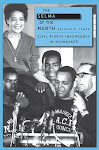
One of the interesting dynamics of the Milwaukee civil rights era is the unique leadership of Fr. James Groppi, a white Catholic priest who served as the advisor to the local NAACP Youth Council and Commandos. Groppi grew up on the city's heavily Catholic white ethnic South Side, so was seen as a religious and race traitor by many. The Youth Council constituted the shock troops of the local Movement. The Commandos were a self-defense group formed in 1966 after a Klan bomb blast destroyed the Milwaukee NAACP office and thousands of angry whites threatened violence in suburban Wauwatosa during a peaceful protest outside the home of Judge Robert Cannon. The Commandos practiced what they called "not violence." They walked along the outside of march lines, didn't carry weapons or start any violence, but fought back if provoked or attacked by white onlookers or racist police. In this way, they offered a compelling tactical alternative to pure Kingian non-violence as well as other Black Power groups, like the Black Panthers, who carried weapons, or advocated revolutionary violence as a tool for liberation. Together, Groppi, the Youth Council and Commandos stood at the vanguard of Milwaukee struggle for racial justice from 1965 through 1969.
Oh, there are lots of fascinating dynamics to the Milwaukee Movement story, but you'll have to wait until my book comes out to read all about 'em... (smile)
 The Reader, an alternative weekly here in Omaha, is running a two-issue series on the local civil rights movement. In the current issue, "Full Freedom Now" focuses on the 4CL, or "the Citizens Coordinating Committee for Civil Liberties." During the early-mid-1960s, the group, led by four clergymen, used non-violent direct action to press for change on a host of issues. Their list of demands for the city council included: the hiring of more black people by the city and schools, the integration of police cruisers, and what would ultimately prove the hardest to achieve — a city ordinance outlawing discrimination in housing. Rev. Kelsey Jones recalled, “Racial problems exist here in a more acute degree than in Cleveland, Detroit, or Baltimore,” Rev. Jones said in a Sun Special article in 1963. “We only think things are worse in those cities because they are out in the open. Here, they are cemented. Take the cap off, as in Mississippi, and it would be the same.” A second article, "We Just Wanted to Swim, Sir," focuses on the successful attempt by the local NAACP Youth Council to desegregate the public swimming pool at Peony Park.


