...rummaging through the debris in "post-racial" America...
My Book:
(click photo above)
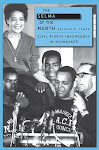
"The Selma of the North": Civil Rights Insurgency in Milwaukee
Between 1958 and 1970, a distinctive movement for racial justice emerged from unique circumstances in Milwaukee. A series of local leaders inspired growing numbers of people to participate in campaigns against employment and housing discrimination, segregated public schools, the membership of public officials in discriminatory organizations, welfare cuts, and police brutality.
The Milwaukee movement culminated in the dramatic—and sometimes violent—1967 open housing campaign. A white Catholic priest, James Groppi, led the NAACP Youth Council and Commandos in a militant struggle that lasted for 200 consecutive nights and provoked the ire of thousands of white residents. After working-class mobs attacked demonstrators, some called Milwaukee “the Selma of the North.” Others believed the housing campaign represented the last stand for a nonviolent, interracial, church-based movement.
Patrick Jones tells a powerful and dramatic story that is important for its insights into civil rights history: the debate over nonviolence and armed self-defense, the meaning of Black Power, the relationship between local and national movements, and the dynamic between southern and northern activism. Jones offers a valuable contribution to movement history in the urban North that also adds a vital piece to the national story.
Think you know the full story of the civil rights era? Patrick Jones's masterful study of the movement in Milwaukee will make you think again. Meticulously researched and elegantly written, The Selma of the North provides a devastating rebuttal of many of the conventional narratives of the civil rights movement. Here a vibrant nonviolent movement in the de-industrializing Midwest grows into a Black Power movement led by urban youth and a white Catholic priest who use confrontational direct action to lay bare the fissures of racial inequality in the 'liberal' North. --Jeanne Theoharis, Brooklyn College, editor of Freedom North and Groundwork
A well-researched, well-written, and important history. Based on a rich array of sources, this book enhances our understanding of civil rights activism in the postwar urban North and establishes a useful foundation for the comparison of similar developments elsewhere in the country. --Joe William Trotter, Jr., Carnegie Mellon University, author of Black Milwaukee
This book fills a serious gap in the literature of the civil rights revolution, joining studies on other cities in laying the groundwork on race and civil rights in the postwar urban North. Jones tells a good story, capturing events that might otherwise be lost to history. --Arnold R. Hirsch, University of New Orleans, author of Making the Second Ghetto
The Selma of the North is an insightful and invigorating addition to the growing literature on black freedom struggles outside of the South. Jones's important and informative account writes Milwaukee back into the narrative of the civil rights-Black Power era and in the process expands our understanding of postwar America. --Peniel E. Joseph, Brandeis University, author of Waiting Till the Midnight Hour
The Selma of the North is a riveting new story of the civil rights movement in America, a tale on par with Selma, Birmingham, and Montgomery in its power and importance. Jones's magisterial research and magnetic prose illuminate the untold story of the battle for the urban north in the 1960s, a battle that shows how race has always been the Achilles heel of white progressives. This story transcends easy dichotomies of black and white, North and South, radical and reformist. How did a group called 'the Commandos' define nonviolence? How did a white Catholic priest become a 'Black Power' leader? If this is not a saga for the age of Obama, I don't know what is. --Timothy B. Tyson, Duke University, author of Radio Free Dixie and Blood Done Sign My Name
Exactly how can we be in post-racial America when nearly 40 percent of black children under the age of 5 live at or below the poverty line?
How are we in post-racial America when the level of school segregation for Hispanics is the highest in the forty years and segregation of blacks is back to levels not seen since the late 1960s?
How are we in post-racial America when the gaps in wealth, income, education and health care have widened over the last eight years?
Yes, how, indeed?
Barack Obama's victory was something, but not everything, and we need to be clear about the serious and daunting task that lays ahead in terms of racial justice. The challenge before us is to put substance to the symbol. We must not get so lost in our self-congratulation over the election of our first black president that we forget the persistent chasm of caste and class in our society today, a yawning gap that will require sustained attention, organized political action and significant resources if it is to be bridged.
There has been much controversy surrounding Barack Obama's affiliation with Trinity United Church in Chicago. Past comments by the out-going minister, Rev. Jeremiah Wright, which recently appeared on YouTube, have stirred rancor, leading Obama to publicly repudiate those comments and Wright to leave his symbolic post in Obama's campaign. I don't want to jump into the specifics of Wright's comments here at this time, but do want to offer some broader context on Obama's faith and his Church...
Before I do that, allow me to make a somewhat obvious point: Hopefully, the silver lining in all of this hoo-ha over Rev. Wright and Trinity United is that it should put to rest once and for all the bogus smear that continues to circulate on the internet and in gossip that Obama is a Muslim. Very clearly he is not and has never been Muslim. Ok? Got it? Good. Tell your friends...
Now that that is out of the way, let me go further and write the while Obama is not a Muslim, but a practicing Christian who believes that Jesus is the son of God, if he were Muslim that should be immaterial to his candidacy. Just like belief in Christianity should not be a prerequisite to elected office, in general, a belief in Islam should not rule any citizen out from running for office or serving his or her country in the political sphere.
Anyway, on to the main reason I am hitting this topic this morning...
First, here is Barack's statement yesterday about Wright's comments and his own faith journey:
Second, here is a nice YouTube by a white minister who also attends and ministers at Trinity. It is significant that she is white considering the belief out there in the media-ether that Trinity is a black-only church. It is not:
Last, here is an EXCELLENT article on Trinity, situating the church within a broader context of race and faith stretching back to the civil rights/Black Power era. I've posted this one previously, but it is well worth another look:
So, take a little time to look a little deeper into Trinity's faith community. Do some exploring for yourself and I think you will find that on balance, this is a very positive, inclusive and spirit-filled church that situates social justice at the forefront of their theology.
The mythic image of the "melting pot" has been a powerful trope throughout American history to describe how such a diverse country becomes one nation. Yet, over time, this narrative has come under fire from activists and academics. During the 60s, political activists in the civil rights movement saw the melting pot as another form of forced assimilation and cultural/historical erasure. Academic historians also have seriously challenged the idea that America has ever successfully "melted" its various constituent parts into some unified American character. Some have offered, instead, the metaphor of the "tossed salad," which emphasizes both the distinctness of individual cultures/histories, while also acknowledging that we share some sort of common experience/destiny as USians.
This is not a purely academic question. The narrative we use reveals quite a bit about how we think of ourselves and how we deal with diversity.
Recently, I came across an interesting article - "American Melting Pot vs Indian Cultural Mosaic" - which speaks to these issues over at New American Media. The essay is written by Punit Arora and originally appeared in India Currents.
The article defines "cultural mosaic" this way:
Cultural Mosaic is a term that was first coined by John Murray Gibbon in Canadian Mosaic. Gibbons disapproved of the American concept of the melting pot because he felt it asked immigrants to cut-off ties with their roots and culture and adopt completely alien practices. In contrast, he felt that Canada should promote a mosaic approach in which each wave of immigrants could contribute something new to the society.
Arora further argues that India offers more support for the mosaic approach:
While the United States necessitates that we each adapt to dominant cultural norms, India, more than any other country in the world, emphasizes the adoption and promotion of the “cultural mosaic” approach. By celebrating differences and by according legitimacy to the values held by all communities, India makes it possible to negotiate and develop a synthesis.
How do you think about diversity in America? Do these narratives matter? If so, how? To what extent do immigrants have a responsibility to assimilate ("melt") into mainstream American culture and to what extent should they maintain their cultural and historical ways?

 Over at The Progressive, Fred McKissick reminds us, in this post-election Obama-glow, "We still aren’t in a post-racial society." He asks,


