...rummaging through the debris in "post-racial" America...
My Book:
(click photo above)
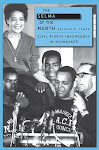
"The Selma of the North": Civil Rights Insurgency in Milwaukee
Between 1958 and 1970, a distinctive movement for racial justice emerged from unique circumstances in Milwaukee. A series of local leaders inspired growing numbers of people to participate in campaigns against employment and housing discrimination, segregated public schools, the membership of public officials in discriminatory organizations, welfare cuts, and police brutality.
The Milwaukee movement culminated in the dramatic—and sometimes violent—1967 open housing campaign. A white Catholic priest, James Groppi, led the NAACP Youth Council and Commandos in a militant struggle that lasted for 200 consecutive nights and provoked the ire of thousands of white residents. After working-class mobs attacked demonstrators, some called Milwaukee “the Selma of the North.” Others believed the housing campaign represented the last stand for a nonviolent, interracial, church-based movement.
Patrick Jones tells a powerful and dramatic story that is important for its insights into civil rights history: the debate over nonviolence and armed self-defense, the meaning of Black Power, the relationship between local and national movements, and the dynamic between southern and northern activism. Jones offers a valuable contribution to movement history in the urban North that also adds a vital piece to the national story.
Think you know the full story of the civil rights era? Patrick Jones's masterful study of the movement in Milwaukee will make you think again. Meticulously researched and elegantly written, The Selma of the North provides a devastating rebuttal of many of the conventional narratives of the civil rights movement. Here a vibrant nonviolent movement in the de-industrializing Midwest grows into a Black Power movement led by urban youth and a white Catholic priest who use confrontational direct action to lay bare the fissures of racial inequality in the 'liberal' North. --Jeanne Theoharis, Brooklyn College, editor of Freedom North and Groundwork
A well-researched, well-written, and important history. Based on a rich array of sources, this book enhances our understanding of civil rights activism in the postwar urban North and establishes a useful foundation for the comparison of similar developments elsewhere in the country. --Joe William Trotter, Jr., Carnegie Mellon University, author of Black Milwaukee
This book fills a serious gap in the literature of the civil rights revolution, joining studies on other cities in laying the groundwork on race and civil rights in the postwar urban North. Jones tells a good story, capturing events that might otherwise be lost to history. --Arnold R. Hirsch, University of New Orleans, author of Making the Second Ghetto
The Selma of the North is an insightful and invigorating addition to the growing literature on black freedom struggles outside of the South. Jones's important and informative account writes Milwaukee back into the narrative of the civil rights-Black Power era and in the process expands our understanding of postwar America. --Peniel E. Joseph, Brandeis University, author of Waiting Till the Midnight Hour
The Selma of the North is a riveting new story of the civil rights movement in America, a tale on par with Selma, Birmingham, and Montgomery in its power and importance. Jones's magisterial research and magnetic prose illuminate the untold story of the battle for the urban north in the 1960s, a battle that shows how race has always been the Achilles heel of white progressives. This story transcends easy dichotomies of black and white, North and South, radical and reformist. How did a group called 'the Commandos' define nonviolence? How did a white Catholic priest become a 'Black Power' leader? If this is not a saga for the age of Obama, I don't know what is. --Timothy B. Tyson, Duke University, author of Radio Free Dixie and Blood Done Sign My Name
Uhhhh... this graphic speaks for itself. Essentially, a full 1/4 of the entire adult population of the United States can now be categorized as OBESE. Like the environment, this is a problem that is in plain view, that everyone knows about, yet most fail to take the required (dramatic) steps to change it... And the tragedy is that obesity is linked to so many other problems and maladies, on the front end as a cause and on the back end as a result.
(click to enlarge image)
Any thoughts about the heft of our fellow citizens? Any thoughts about how to change this? Is it merely a matter of "personal responsibility"? Or, is it linked to broader social issues?
Most USians have never heard of Yuri Kochiyama. Her story is not taught in most schools. The lessons of her experience go unlearned. That is a real shame because Kochiyama has been one of the leading social justice advocates in the United States for more than 40 years:
• In a 1965 Life magazine photograph taken moments after the assassination of Malcolm X, Yuri is the woman in thick black glasses cradling his head in her hands as his bullet-riddled body lies splayed on the floor. As a longtime resident of Harlem, Yuri, a petite Japanese-American woman and mother of six, fought for black nationalism and Black Power.
• In 1977 Kochiyama was one of thirty people who stormed the Statue of Liberty and held it for nine hours to bring attention to the struggle for Puerto Rican independence.
• In the 1980s, Kochiyama and her husband -- whom she met at a World War II internment camp -- lobbied for reparations to Japanese Americans who were imprisoned by the government during that war.
• In recent years, Kochiyama has been a passionate critic of American foreign policy, drawing links between her internment during WWII and the detainment and harassment of thousands of Middle Easterners since September 11.
A 2002 article in the East Bay Express explains, "To mainstream America, the Movement may be dead, little more than textbook photographs of protesters marching arm in arm. But to Yuri Kochiyama, the Movement is alive and well and living in the Bay Area. And one of its most emphatic voices comes not from an idealistic Berkeley student, but from an eighty-year-old who gets around with a walker."
So who is Yuri Kochiyama? What is her story?
Yuri Kochiyama was born in 1921 in San Pedro, California. As teenagers, Yuri and her two brothers lived a red-white-and-blue, oh-so-apple-pie existence. Yuri taught Sunday school, volunteered for the YWCA and Girl Scouts, attended every football game in a town where high-school sports mattered above all else, and even joined the Women's Ambulance and Defense Corps of America, which preceded the Women's Army Corps.
Religious and baseball-obsessed, Yuri grew up as Mary Yuriko Nakahara in San Pedro, a port town just south of Los Angeles. Her father had come to America by himself, later returning to Japan to find a wife. He found her teaching at the school where his father was principal. In San Pedro, Seichi Nakahara owned a fish market. He often did business with Japanese steamships and sometimes brought ship officers home for dinner.
Most of the residents of Terminal Island, located just across the bay, were Japanese immigrants, but in the town where the Nakaharas lived the population was mostly white, working-class Italian and Yugoslavian immigrants. "We Japanese kids never felt embarrassed that our parents couldn't speak perfect English, because no one's parents spoke perfect English," Yuri said.
The bombing of Pearl Harbor radically changed Yuri Kochiyama's life:
But all that changed on December 7, 1941. Yuri had just returned home from Sunday school when a knock came at the door. Three FBI agents wanted to see her father. He was sleeping, having returned just the day before from the hospital where he underwent an ulcer operation. Within minutes, though, the agents rushed him into his bathrobe and slippers and whisked him away. The Japanese were bombing Pearl Harbor.
The next day, agents returned and rifled through everything in the house. For days the family didn't know where their father was. Finally, a lawyer located him in a federal prison across the bay on Terminal Island. Yuri's mother pleaded with authorities to take him to the hospital and send him back to jail when he was better. Meanwhile, Yuri's twin brother Peter, then a student at UC Berkeley, hitchhiked home, since no one would sell him a train ticket. By December 10, both her brothers tried to sign up for military service. Peter was accepted even though his father was accused of spying.
When Seichi Nakahara was finally returned to a hospital, his bed was the only one in the ward bearing the sign "Prisoner of War." The children were allowed to visit only once. Peter came in his uniform, and his father quivered when he saw him. Unable to recognize his son, he thought that someone had come to interrogate him. A week later, on the evening of the 20th, the hospital sent Seichi home in an ambulance. Overjoyed at first, the Nakaharas soon realized he was dying.
"Because he couldn't talk, we didn't know if he could hear," Yuri said. "We waved our fingers in front of his eyes, but he didn't move."
By next morning he was dead at age sixty. The FBI called to warn that anyone attending the funeral would be under surveillance. Friends defied the five-mile travel ban placed on Japanese Americans to show up at his service. FBI agents stood at the doors.
And, of course, internment made a deep and lasting impression on Kochiyama:
On February 19, 1942, President Franklin D. Roosevelt signed Executive Order No. 9066, authorizing the military to remove people of Japanese ancestry from their homes to prison camps. Yuri considers her family lucky because they had more than a month to prepare, while some only had forty-eight hours. After being forced to live for six months in a horse stall at the Santa Anita racetrack, Yuri, her mother, and oldest brother were tagged, numbered, and loaded onto cattle trains. No one knew where they were going. The Nakaharas ended up in a concentration camp in Jerome, Arkansas. Two of Yuri's brothers joined the U.S. military during the war.
They lived in barracks, twelve to a block. The camps ran self-sufficiently. Everyone had a job. First-generation Issei women ordered cloth from the Sears-Roebuck catalogue to make curtains for the toilet stalls. Yuri continued to teach Sunday school. Many of the second-generation Nisei GIs were stationed in the south and would visit by the busloads on the weekends. The young women formed their own USO in the camp for them.
Here is Sandra Oh reading the words of Yuri Kochiyama from Howard Zinn's Voices of a People's History:
Because of her experiences during the Second World War, Kochiyama is most riled by unjust imprisonment -- whether of Movement revolutionaries, Iranians during the Iran-Contra affair, or Middle Eastern immigrants today. She tirelessly follows hundreds of cases of Americans she considers political prisoners, including Mutulu Shakur, Yu Kikumura, George Baba Eng, Bashir Hameed, Abdul Majid, Oscar Lopez Rivera, Mumia Abu Jamal, Ed Poindexter, Mondo we langa, and others. She writes regularly to many of these prisoners and publishes her own newsletter.
Here is a nice segment from Democracy Now! that features Yuri Kochiyama discussing her internment during WWII as well as the assassination of Malcolm X:
She is also featured in a documentary, titled "Freedom Fighters":
So, what makes Yuri Kochiyama unique?
First, as an Asian American, she represents a history, a set of experiences, a perspective, a community that is often ignored, or overlooked, both in the broader U.S. culture, as well as in Movement annals.
Similarly, the same could be said about the fact that Kochiyama is a female activist/organizer/leader. Although we know that women were integrally involved in all of the social movements of the 1960s-era, their contributions are often ignored altogether or overshadowed by male public leaders who hogged the limelight.
Third, Kochiyama is "unusual even among activists. While many pay lip service to the notion of diversity, few, if any, have worked for so many causes and embraced so many distinct ethnic groups. 'I don't think there are too many people you can really say were involved simultaneously in cross-cultures in a real day-to-day basis,' said family friend Nyisha Shakur, who used to make prison visits with Yuri on the East Coast. 'I don't think I know of any others.'"
Here is a good video clip on this point:
Fourth, Yuri Kochiyama's is a profound example of a "life led in struggle." She embodies "a revolutionary spirit," a total commitment to social justice.
More "inspired talks by the world's greatest thinkers and doers" over at TED:
A pioneer in ocean exploration, David Gallo is an enthusiastic ambassador between the sea and those of us on dry land. In this brief talk, Gallo shows jaw-dropping footage of amazing sea creatures, including a color-shifting cuttlefish, a perfectly camouflaged octopus, and a Times Square's worth of neon light displays from fish who live in the blackest depths of the ocean. Check it out:
Noted racist, sexist, homophobe, Confederate-sympathizing, poor-hating, anti-communist nut job senator from North Carolina, Jesse Helms, has died. I know we are supposed to be respectful when someone dies and not speak ill of them, but I can't say I'm too busted up over this loss. In fact, I hope he is in the segregated section of Hell... you know, the section that is particularly fiery. The section set aside for particularly obnoxious and unyielding defenders of the unjust status quo. I hope he is having to do grueling, back-breaking manual labor for a whole slew of black angels. I hope he is having to wash the naked bodies of elderly black saints, scrub the floors and make food for an African American celestial choir. I hope he is under constant orders by black males angels with white angel wives. And, to cap it off, I hope he must spend all his downtime being massaged with oil by hundreds of fabulously gay men while listening to militant feminist diatribes on his ipod!
So, who was Jesse Helms? If you want to read more measured analysis, here is what the New York Times wrote.
I won't go through his whole biography, but I will note that Helms was widely known, inside and outside his party, as a mean-spirited, cantankerous, uncompromising man. He was born into an extremely racist culture in Monroe, North Carolina,Klan country near the S.C. border, the son of another obnoxious racist, Jesse Helms, Sr. In his award-winning account of Robert Williams, a Monroe civil rights leader, historian (and my academic advisor and friend!) Tim Tyson explains that it was Helms, Sr.'s racist brutality that initially brought Williams face-to-face with racial injustice. As Tyson explains, as an 11-year-old in 1936, Williams saw a white policeman, Jesse Helms, Sr. beat an African-American woman to the ground. Williams watched in terror as North Carolina Senator Jesse Helms' father hit the woman hard and "dragged her off to the nearby jailhouse, her dress up over her head, the same way that a cave man would club and drag his sexual prey." So, the apple clearly did not fall far from the tree...
Jesse Helms, Jr., was one of these sugar-sweet "southern gentlemen" who is actually a hate-filled person who liked to see other people suffer. In the grand southern tradition, Helms blocked so much legislation his colleagues called him "Senator No." And, because he was such an unrelenting jerk and general pain in the ass, the chairman of the Democratic Party once dubbed Helms the "Prince of Darkness."
Helms came to politics late, getting his start working on the 1950 campaign of Willis Smith, a campaign some called the most overtly racist campaign in the U.S. since the turn-of-the-century. Helms crafted an attack ad, which included this narration: "White people, wake up before it is too late. Do you want Negroes working beside you, your wife and your daughters, in your mills and factories? Frank Graham favors mingling of the races." Another ad featured photographs Helms himself had doctored to illustrate the allegation that Graham's wife had danced with a black man. After they won election, Helms worked for Smith in Washington before leaving to work for the segregationist presidential campaign of Sen. Richard Russell of Georgia.
In 1960, while also serving as a city council member in Raleigh, Helms rose to prominence as a tv news commentator railing against the civil rights movement, the supposedly liberal media and peace churches that were critical of American foreign policy. In the typical bluster of the racist Right from the 1950s and 1960s, Helms claimed the civil rights movement was infested by "communists" and “moral degenerates.” He called Social Security, the most popular social program in American history, “nothing more than doles and handouts.” He described Medicaid, which provides basic health care for the poor, as a “step over into the swampy field of socialized medicine.” You get the picture...
Helms claimed he wasn't racist, yet he dedicated the bulk of his life to opposing any and all forms of justice for people of color and promoted a legislative agenda that was overtly hostile to the interests of the poor and most people of color. In 1963, he wrote, "The Negro cannot count forever on the kind of restraint that's thus far left him free to clog the streets, disrupt traffic, and interfere with other men's rights." In 1983, playing on long-standing racist stereotypes of black criminality, he wrote, "Crime rates and irresponsibility among Negroes are a fact of life which must be faced." Helms often used racial cues and code words to inject his campaigns with the divisive politics of race. The Rev. Jesse L. Jackson, the Rev. Martin Luther King Jr. and other prominent black leaders were frequent targets of Helms’ speeches and fund-raising letters. He worked in the Senate against civil rights legislation, such as extension of the Voting Rights Act, and domestic programs favored by black voters. Helms sponsored measures barring court-ordered school busing for integration, and was the leading Senate supporter of the apartheid regime of South Africa. In 1983, Helms made headlines throughout the country when he put forth sensational charges as he waged a filibuster against an effort to make King’s birthday a national holiday. Helms's biographer, Ernest Furguson wrote in 1986, “All his public life, he has done and said things offensive to blacks, and to anyone sensitive to racial nuance.” At the time Helms retired, David Broder of the Washington Post wrote, “What really sets Jesse Helms apart is that he is the last prominent unabashed white racist politician in this country — a title that one hopes will now be permanently retired... What is unique about Helms – and from my viewpoint, unforgivable – is his willingness to pick at the scab of the great wound of American history, the legacy of slavery and segregation, and to inflame racial resentment against African Americans.”
In 1990 and 1996, a black architect, Harvey Gantt, ran against Helms for the senate. Gantt had successfully desegregated Clemson University in South Carolina in 1963. South Carolina was the last state to hold out on desegregation of higher education. because Helms was such a polarizing figure, both elections became big national news. During the 1990 campaign, Gantt was polling well with a couple of weeks to go, prompting some to predict a grand upset over Helms. Yet, Helms had his own trick up his sleeve: the race card. At the last minute, the Helms campaign ran an ad featuring ominous music backing images of white hands crumpling a rejection notice for a job as an ominous narrator says "You needed that job and you were the best qualified, but they had to give it to a minority. Is that fair? Harvey Gantt says it is." The ad was a smashing success. Despite the strong polling data for Gantt, Helms ultimately won the election, prompting many to point out that whites seem to be more willing to tell pollsters that they would vote for a black candidate than to actually go out and vote for a black candidate on election day. As a result, it has become basic political practice now to assume that a black candidate against a white candidate must have at least a 5 point advantage to be considered even in the race. "The tension that [Helms] creates, the fear he creates in people, is how he's won campaigns," Gantt said several years later.
Here is the infamous Harvey Gantt "Hands" ad:
And his racism continued throughout his life. For example, in 1995, when a caller to CNN's Larry King Live show praised guest Jesse Helms for "everything you've done to help keep down the niggers," Helms' response was to salute the camera and say, "Well, thank you, I think." What makes Helms unique among his generation of hardline segregationists is that, unlike George Wallace or Strom Thurmond, he never moderated his views on race. "I can't think of many other examples of major opponents of the civil rights movement that didn't modify their view on civil rights," says William Link, a professor at the University of Florida and a Helms biographer. "He was very much a man of the times and his generation ... of North Carolina whites (who) grew up with segregation." According to Merle Black, a political science professor at Emory University in Atlanta, "Helms operated as though African-Americans didn't vote. He was unlike other politicians, who tried to expand their original basis of support. Helms never did that."
For good measure, here are a few of Helms' greatest rhetorical hits. Note that he hated a whole lot of people, not just black folks:
• "To rob the Negro of his reputation of thinking through a problem in his own fashion is about the same as trying to pretend that he doesn't have a natural instinct for rhythm and for singing and dancing." -- on African Americans
• "No, I do not. And neither do the people in the armed forces. Mr. Clinton better watch out if he comes down here. He'd better have a bodyguard." -- When asked in 1994 on CNN if he thought President Clinton was "up to the job" of serving as Commander-in-Chief
• "Let me adjust my hearing aid. It could not accommodate the decibels of the Senator from Massachusetts. I can't match him in decibels or Jezebels." -- After Ted Kennedy made an emotional speech to let foreigners with HIV become US citizens, 1993.
• "Many support the the court's abortion decision do so by describing the constitution as a "living document" which the court must be permitted to interpret with the widest possible flexibility. But, when they say the constitution is a living document, they really mean that the constitution is dead, and that the Supreme Court as a supreme undertaker may dispose of the corpse as it pleases." -- At the National Pro-Life PAC Banquet, Chicago Illinois, May 5, 1975
• "The New York Times and Washington Post are both infested with homosexuals themselves. Just about every person down there is a homosexual or lesbian." -- 1995
• "If God had wanted us to use the metric system, Jesus would have had 10 apostles."
• "I was with some Vietnamese recently, and some of them were smoking two cigarettes at the same time. That's the kind of customers we need!" -- at a 1996 dinner promoting the tobacco industry
• "I know Mark's death was a devastating blow to you. As far as homosexuality, the Bible judges it, I do not. As for Mark, I wish he had not played Russian roulette with his sexual activity. I have sympathy for him and for you. But there is no escaping the reality of what happened." -- Response to a conservative, Republican supporter - Patsy Clarke - in North Carolina after her son died of AIDS and she wrote Helms asking for some compassion. Clarke was horrified at herself when she realized her son had suffered alone until the very end of his life in large part because of the policies she and people like Jesse Helms had advocated.
• "The University of Negroes and Communists" -- Reference to the University of North Carolina devised by Mr. Helms when he worked for Willis Smith's 1950 U.S. Senate campaign.
• "I've been portrayed as a caveman by some. That's not true. I'm a conservative progressive, and that means I think all men are equal, be they slants, beaners or niggers." -- February 6, 1985
• "I've never heard once in this chamber anybody say to the homosexuals, 'stop what you're doing.' If they would stop what they're doing there would not be one additional case of AIDS in the United State."
• "This bill attempts to make sure that President Clinton is not allowed to do by Executive Order what Congress has declined to enact in the past two congressional sessions namely, to treat homosexuals as a special class protected under various titles of the Civil Rights Act of 1964. -- Jesse Helms, introducing an anti-gay bill in January, 1999
• "What is really at stake is whether or not America will allow the cultural high ground in this nation to sink slowly into an abyss of slime to placate people who clearly seek or are willing to destroy the Judaic-Christian foundations of this republic." -- Helms opposing funding for the National Endowment of the Arts
• "All I know is that D'Aubuisson is a free enterprise man and deeply religious." -- Responding to evidence that Roberto D'Aubuisson directed Salvadoran death squads that murdered thousands of civilians.
• "Your tax dollars are being used to pay for grade-school classes that teach our children that CANNIBALISM, WIFE-SWAPPING and MURDER of infants and the elderly are acceptable behavior." -- Fund raising mailer, 1996
• "I’m so old-fashioned I believe in horse whipping.” -- During a debate in 1991 on an AIDS-related amendment.
• "...in the l8 years and 5 months I've been in the senate, none, none have been more capable than Dan Quayle." -- on the former, much maligned Vice President
• "Democracy used to be a good thing, but now it has gotten into the wrong hands."
• "All Latins are volatile people. Hence, I was not surprised at the volatile reaction." -- After Mexicans protested his visit in 1986
• "It's their deliberate, disgusting, revolting conduct that is responsible for the disease." -- Justifying his refusal to give financial support to families of AIDS victims.
• "Atheism and socialism -- or liberalism, which tends in the same direction -- are inseparable entities. When you have men who no longer believe that God is in charge of human affairs, you have men attempting to take the place of God by means of the Superstate." -- on liberalism
• "Homosexuals are weak, morally sick wretches." -- 1995 radio broadcast
• “The nation has been hypnotized by the swaying and gesturing of the watusi and the frug.” -- WRAL Viewpoint, 1966
• "They should ask their parents if it would be all right for their son or daughter to marry a Negro." -- In response to Duke University students holding a vigil after Martin Luther King, Jr. was assassinated, 1968
Helms had a particular hatred for gays and lesbians. Over the years, Helms regularly referred to gays and lesbians as "degenerate" and "weak, morally sick wretches." He clashed with gay activists throughout the 80s and 90s over AIDS, which he thought was a plague against gays and lesbians. He said, "If homosexuals would only stop doing what they're doing, there wouldn't be any more AIDS." In a 1988 tirade highlighting his routine opposition to AIDS research funding, Helms lashed out at the Kennedy-Hatch AIDS bill: "There is not one single case of AIDS in this country that cannot be traced in origin to sodomy." It is this type of reprehensible, Bible-looney thinking that allowed that disease to spread unchecked for many years, costing untold numbers of lives. In 1993, when then-President Clinton sought confirmation for an openly homosexual assistant secretary at the Department of Housing and Urban Development, Helms registered his disgust. "I'm not going to put a lesbian in a position like that," he said in a newspaper interview at the time. "If you want to call me a bigot, fine."
Helms wasn't a fan of women's equality, either. Once, Helms remonstrated ten female members of the House of Representatives to "act like ladies" when they interrupted a Senate Foreign Relations Committee hearing to demand support of a U.N. treaty against gender discrimination, and subsequently had them removed from the hearing by Capitol police. Or, another time, he equated women's right to control their own bodies with the Holocaust and the Sept. 11 terror attacks. And in a 1993 episode that mixed his infamous racism with his infamous sexism, Helms sang "Dixie" in an elevator to Carol Moseley-Braun, the first African-American woman elected to the Senate, bragging, "I'm going to make her cry. I'm going to sing Dixie until she cries."
And, finally, Helms was a fanatical anti-communist, a position that led him to support many tyrannical regimes. As FAIR has detailed, Helms offered strong, consistent, if sometimes shadowy, support for violent, anti-democratic forces abroad, from South Africa to El Salvador, yet few mainstream media outlets probed his ties to groups that would accurately be described as fascist. One exception was an editorial in the Boston Globe: "Helms' role in supporting foreign thugs such as Roberto D'Aubuisson, the cashiered Salvadoran major who ran death squads responsible for savage political murders, did lasting harm to America's good name. In South Africa, Argentina, Mozambique, Honduras, and Nicaragua, Helms cooperated with racists and fascists who have nothing in common with the ideals of American democracy." Moreover, according to Steve Clemons, "Helms, who served as Chairman of the Senate Foreign Relations Committee, seemed to despise globalists in general, would have loved to wreck the United Nations and other international institutions, and reified an American nativist jingoism that he helped sell with beguiling Southern charm and linguistic twang."
But, despite the brief litany of Helms' transgressions that I have posted here, the current Republicans love them some Jesse:
• According to President George W. Bush, “Jesse Helms was a kind, decent and humble man and a passionate defender of what he called ‘the Miracle of America.’ So it is fitting that this great patriot left us on the Fourth of July.”
• "It's just incredible that he would die on July 4, the same day of the Declaration of Independence and the same day that Thomas Jefferson and John Adams died, and he certainly is a patriot in the mold of those great men," said former North Carolina GOP Rep. Bill Cobey, the chairman of The Jesse Helms Center in Wingate, N.C.
• "America lost a great public servant and true patriot today," White House spokesman Scott Stanzel said.
• "Today we lost a Senator whose stature in Congress had few equals. Senator Jesse Helms was a leading voice and courageous champion for the many causes he believed in," Senate Republican leader Mitch McConnell said in a statement.
• In 2005, another kook from the far Right, Jerry Falwell, said, "I've had two heroes in my life: Jesse Helms and Ronald Reagan." He said it was people like Helms who "prevented the country from going to hell in a handbasket.”
And, sadly, because he was "an architect of modern conservatism," we will be doing battle with the Helms legacy for years to come. The damage of his policy views continues to reverberate throughout our society, taking its toll on countless real live human beings each day. It is important to remember that Helms was not some fringe lunatic, but one of the most revered members of his political party. He was a key leader of the new conservative movement that emerged in the 1970s. That says something about the recent history of the Republican Party and the New Right, I'd say.
So, there you have it, my equivalent of a 21-gun salute to one of the bigger reactionary jerks our country has produced in recent times. Here's to you, Jesse. Don't let those pearly gates hit you in the butt on your way down to the basement of eternal damnation...


 Most USians have never heard of Yuri Kochiyama. Her story is not taught in most schools. The lessons of her experience go unlearned. That is a real shame because Kochiyama has been one of the leading social justice advocates in the United States for more than 40 years:
 (Image Source: The Onion) (click to enlarge)
