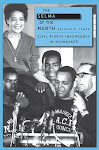

New documentary on music and the southern civil rights Movement:
Showing posts with label civil rights movement. Show all posts
Showing posts with label civil rights movement. Show all posts
Sunday, February 28, 2010


Wednesday, February 03, 2010
Film: "Blood Done Sign My Name" (trailer)
 I received my Ph.D. in modern U.S. History and African American Studies from the University of Wisconsin-Madison in 2002. My primary adviser, mentor and friend there was Tim Tyson, one of the great Movement historians of our time. Tim taught me a lot about being a scholar and an activist, about being a storyteller, about being a citizen. The research I conducted for my M.A. thesis, which was titled, "'Communist Front Shouts Kissing Case to the World!' The Committee to Combat Racial Injustice and the Politics of Race and Gender during the Cold War," became a part of one of the chapters in Tim's first book, Radio Free Dixie: Robert F. Williams and the Roots of Black Power. His second book, Blood Done Sign My Name, is part Movement history, part autobiography. It focuses on the murder of an African American Vietnam veteran in Oxford, North Carolina, during the early-1970s and the social impact of that event on the local community and beyond. Tim's family participated directly in this saga. The incredible thing about this award-winning book is that it is also a personal meditation on race, remembrance and, ultimately, reconciliation. What do we do with these troubling pasts once we unearth them? How do we honor the past, while moving forward into the future... together?
Blood Done Sign My Name has been made into a feature film, starring Rick Schroeder as Tim's dad! Here is the official trailer:
It is rare that this type of story makes it to the big-screen, so I hope you will check it out. Here are a few things you can do:
1. Go see it.
2. Ask your local independent cinema theater to book it.
3. Help spread the word to other folks in your networks.
Here is another clip of Tim talking about the film:
And here is the song, "Blood Done Sign My Name":
Saturday, January 30, 2010
Ideas: Dr. King's Forgotten "Dream" of Economic Justice

I wrote an Opinion piece for the Omaha World Herald reflecting on Dr. King's vision of economic justice.
The essay ran on Monday, January 25, 2010, under the title, "MLK: Justice Requires Economic Transformation."
On Tuesday, an older man called me at my office in Lincoln to let me know that he thought the ideas in the article were "communistic."
Judge for yourself. Here are a few excerpts...
King believed poverty was primarily the result of systemic economic failure and “ongoing economic exploitation,” not individual personal failing. The poor were “damned” to segregated, ghettoized neighborhoods, chronic unemployment and low-paying, meaningless jobs. “Pervasive and persistent want” demoralized the poor, undermined human dignity and led to family disintegration, drug and alcohol abuse, violence and crime.
* * * *
King linked urban poverty with suburban plenty. “The poor and discriminated huddle in the big cities,” he said, “while affluent America displays its new gadgets in the crisp homes of suburbia.” King called suburbs “white nooses around the black necks of the cities.” “Housing deteriorates in central cities,” he groused, while “suburbs expand with little regard for what happens to the rest of America.”
* * * *
Disillusioned with piecemeal reforms, King believed structural change in the economy was essential to end poverty. “True compassion,” he said, “is more than flinging a coin to a beggar. It comes to see that an edifice which produces beggars needs restructuring.”
* * * *
King advocated “democratic socialism,” a mixed economy where citizens, through democratic processes, insert human values into the economy to temper the harsh edges of unbridled free markets.
He fought for an “economic bill of rights,” a $30 billion package guaranteeing full employment, a livable income and increased construction of low-income housing. King called for “massive public works programs (to build) decent housing, schools, hospitals, mass transit, parks and recreation centers.” These public investments would “enrich society” and spur private investment.
* * * *
In an era of ballooning military budgets, billion-dollar Wall Street bailouts, home foreclosures, double-digit unemployment and continuing urban crisis, perhaps we might listen anew to King’s prophetic vision of economic justice.
* * * *
King believed poverty was primarily the result of systemic economic failure and “ongoing economic exploitation,” not individual personal failing. The poor were “damned” to segregated, ghettoized neighborhoods, chronic unemployment and low-paying, meaningless jobs. “Pervasive and persistent want” demoralized the poor, undermined human dignity and led to family disintegration, drug and alcohol abuse, violence and crime.
* * * *
King linked urban poverty with suburban plenty. “The poor and discriminated huddle in the big cities,” he said, “while affluent America displays its new gadgets in the crisp homes of suburbia.” King called suburbs “white nooses around the black necks of the cities.” “Housing deteriorates in central cities,” he groused, while “suburbs expand with little regard for what happens to the rest of America.”
* * * *
Disillusioned with piecemeal reforms, King believed structural change in the economy was essential to end poverty. “True compassion,” he said, “is more than flinging a coin to a beggar. It comes to see that an edifice which produces beggars needs restructuring.”
* * * *
King advocated “democratic socialism,” a mixed economy where citizens, through democratic processes, insert human values into the economy to temper the harsh edges of unbridled free markets.
He fought for an “economic bill of rights,” a $30 billion package guaranteeing full employment, a livable income and increased construction of low-income housing. King called for “massive public works programs (to build) decent housing, schools, hospitals, mass transit, parks and recreation centers.” These public investments would “enrich society” and spur private investment.
* * * *
In an era of ballooning military budgets, billion-dollar Wall Street bailouts, home foreclosures, double-digit unemployment and continuing urban crisis, perhaps we might listen anew to King’s prophetic vision of economic justice.
* * * *
Monday, February 09, 2009
The Civil Rights Era in Omaha
 The Reader, an alternative weekly here in Omaha, is running a two-issue series on the local civil rights movement. In the current issue, "Full Freedom Now" focuses on the 4CL, or "the Citizens Coordinating Committee for Civil Liberties." During the early-mid-1960s, the group, led by four clergymen, used non-violent direct action to press for change on a host of issues. Their list of demands for the city council included: the hiring of more black people by the city and schools, the integration of police cruisers, and what would ultimately prove the hardest to achieve — a city ordinance outlawing discrimination in housing. Rev. Kelsey Jones recalled, “Racial problems exist here in a more acute degree than in Cleveland, Detroit, or Baltimore,” Rev. Jones said in a Sun Special article in 1963. “We only think things are worse in those cities because they are out in the open. Here, they are cemented. Take the cap off, as in Mississippi, and it would be the same.” A second article, "We Just Wanted to Swim, Sir," focuses on the successful attempt by the local NAACP Youth Council to desegregate the public swimming pool at Peony Park.
 Both are worth taking a look at... yet another reminder that the struggle for racial justice was a national, not a regional, phenomenon.
Monday, January 19, 2009
MLK Day, 2009
Here is a smattering of worthwhile articles, essays and other stuff in honor of Martin Luther King Day 2009:
• First, a song of honor, Mahalia Jackson singing "Precious Lord Take My Hand"...
• The BBC has unearthed footage of Dr. King discussing the prospect of the "first black president." Well worth a look...
• United for a Fair Economy has published an important report, "State of the Dream 2009: The Silent Depression"
• NPR aired "a musical tour of MLK's Home."
• Slate has a slideshow of fantastic images of King and the Movement, more generally.
• Amazingly, the Meridian Star in Mississippi published an editorial apology for that newspaper's complicity in white supremacy during the Movement era.
• Michael Eric Dyson has penned a piece explaining "how the prophet (MLK) paved the way for the politician (Obama)."
• Michael Honey argues that Obama must fulfill King's dream of economic justice, human dignity and peace.
• The Washington Post has a nice piece on the Caldwell Family's "long civil rights journey" from the specter of slavery to the unbounded possibility of the Obama era.
• The post has a few other good pieces, as well: "President-Elect Sees His Race as An Opportunity"; "High Hopes for Obama in Mississippi Delta"; an opinion piece by MLK III; Michael Eric Dyson on the roots of King's words in Afro-Christianity
• Danny Schecter asks, "Will the Obama Generation Merge With the Protest Culture of MLK or Strike Its Own Path?"
• ABC News has a piece on civil rights activists' reflections on Obama's ascendance.
• A South Carolina newspaper reflects on the generations view the racial divide.
• The Washington Post has published some polling data on America's racial perceptions.
• One California teacher asks whether Obama's victory means we need to change our racial reading list.
• Finally, make your own Shephard Fairey-inspired image here.
• First, a song of honor, Mahalia Jackson singing "Precious Lord Take My Hand"...
• The BBC has unearthed footage of Dr. King discussing the prospect of the "first black president." Well worth a look...
• United for a Fair Economy has published an important report, "State of the Dream 2009: The Silent Depression"
• NPR aired "a musical tour of MLK's Home."
• Slate has a slideshow of fantastic images of King and the Movement, more generally.
• Amazingly, the Meridian Star in Mississippi published an editorial apology for that newspaper's complicity in white supremacy during the Movement era.
• Michael Eric Dyson has penned a piece explaining "how the prophet (MLK) paved the way for the politician (Obama)."
• Michael Honey argues that Obama must fulfill King's dream of economic justice, human dignity and peace.
• The Washington Post has a nice piece on the Caldwell Family's "long civil rights journey" from the specter of slavery to the unbounded possibility of the Obama era.
• The post has a few other good pieces, as well: "President-Elect Sees His Race as An Opportunity"; "High Hopes for Obama in Mississippi Delta"; an opinion piece by MLK III; Michael Eric Dyson on the roots of King's words in Afro-Christianity
• Danny Schecter asks, "Will the Obama Generation Merge With the Protest Culture of MLK or Strike Its Own Path?"
• ABC News has a piece on civil rights activists' reflections on Obama's ascendance.
• A South Carolina newspaper reflects on the generations view the racial divide.
• The Washington Post has published some polling data on America's racial perceptions.
• One California teacher asks whether Obama's victory means we need to change our racial reading list.
• Finally, make your own Shephard Fairey-inspired image here.
Saturday, January 17, 2009
Dr. King: Struggling Not to Lose Him
A passionate plea to reclaim the memory and legacy of Dr. King...
... and to put the challenging political strategist and activist that King was back into the story.
Take roughly 5 minutes and have a look:
What are your thoughts?
... and to put the challenging political strategist and activist that King was back into the story.
Take roughly 5 minutes and have a look:
What are your thoughts?
Friday, January 16, 2009
"This Man is God-Sent," says Betty Shavers
As a black woman who lived through the Civil Rights struggle in Danville, Va. -- a former tobacco and cotton town best known as the “Last Capitol of the Confederacy” -- Betty Shavers never imagined she’d see an African American be elected president of the United States. Danville, which is located on the North Carolina border, in the reddest part of the state, had a 72 percent voter turnout; 59 percent of those voters supported Barack Obama. The city has a 45.6 percent black population. She shared her thoughts on the election and the coming inauguration with her niece, New American Media contributor Teresa Moore. Word From the Wise is a regular column of elder perspectives from the New America Media ethnic elder news beat.You can read Betty Shavers's essay here.
Saturday, December 13, 2008
Sweet Land of Liberty?
 A decade or so ago, urban historian Thomas Sugrue published a path-breaking book, The Origins of the Urban Crisis, which focused on the fractured racial politics of post-WWII Detroit. The book strongly suggested that the liberal political coalition of the New Deal-era was weak and broke down fairly quickly when race was interjected into the mix. He focused on housing as the lead spot for his analysis, detailing a variety of ways white homeowners acted to "defend" their neighborhoods from African Americans. These racialized housing politics created new political alliances that cut across the traditional New Deal coalition.
Sugrue is now back with a sweeping book - Sweet Land of Liberty - that attempts to chronicle the civil rights movement in the North. Of course, because my own work is in this area, I have been waiting on Sugrue's new book with some interest. Here is the New York Times book review. Here is a recent interview with Sugrue on the book from a New York radio station:
Check 'em out. Any responses? Read anything good lately?
Wednesday, December 03, 2008
Singer and Social Justice Activist, Odetta, Has Passed
 Odetta, the acclaimed folk singer and civil rights activist, has passed away of heart failure. Here is an excellent obituary from the New York Times. They also have a very nice video tribute here. Here is the NPR segment about Odetta. Here is Odetta talking about Dr. King and non-violence on the Tavis Smiley show. The image to the right is of Odetta performing at the historic 1963 March On Washington for Jobs & Freedom in Washington, D.C.
Here is Odetta rockin' out at the Newport festival:
There is a nice clip of her performing, "Give Me Your Hand," here.
Rest in Peace, Odetta. Thank you for your life lived in struggle...
Friday, November 07, 2008
"Obama's Win Has Roots in Mississippi"
 The Sun-Herald, which serves the Biloxi, Gulfport and southern Mississippi area, published two interesting articles about Student Nonviolent Coordinating Committee (SNCC) veterans and their role, 40+ years ago paving the way for an Obama presidency. The first article focuses on 1963, when Aaron Henry, a black civil rights activist, teamed up with Rev. Ed King, a white Methodist minister, to run for Governor and Lt. Governor in Mississippi. The second brief article focuses on Unita Blackwell and Hollis Watkins, both Movement vets. Check 'em out...

Selma, Lord, Selma!
 (Ms. Bland is to the right of Barack Obama as you look at the above photo!)
Selma, AL, is sacred ground in the civil rights movement. It was there, in '65, during the historic voting right campaign, at the foot of the Edmund Pettus Bridge, that thousands of people made a stand for racial justice that reverberated across the country and around the world. Those activists and local people took their lumps, but their efforts resulted in the passage of the Voting Rights Act of 1965. Ms. Joanne Bland was there, as a little girl, and has spent the rest of her life in Selma, carrying on the struggle for full equality. I've had the great fortune to get to know Ms. Bland, first as a grad student at the U. of Wisconsin, and more recently when I brought her to Lincoln as a part of "From Selma to Washington: A 40th Anniversary Celebration of the 1965 Voting Rights Act," a conference I organized in 2005.
This New York Times video features Ms. Bland and other local people in Selma, as they vote and await the results of election '08 on Tuesday. In case you are unclear about the deep meaning of Barack Obama's historic victory, please watch this moving video... but be prepared to shed some tears.
I love you Ms. Bland! Thank you for everything you and all the other local people in Selma have done for our nation, for our democracy! This one is for you and for all the other foot-soldiers of the Movement. We are a better nation because of your sacrifices...
Sunday, October 26, 2008
This American Life: "Take a Negro Home"
 Ira Glass's NPR program, "This American Life," is one of my absolute favorite radio shows. A great Sunday treat is to settle in and listen to the latest strange, but compelling, slice of humanity captured by Glass and his crew. Even cooler, there is now a TV version of the show on Showtime!
Anyway, my race and politics class just read Doug McAdam's book, Freedom Summer, which focuses on the Student Nonviolent Coordinating Committee's historic 1964 summer voting rights project in Mississippi. The book focuses primarily on the roughly 1,000 affluent, white college-aged volunteers who came South for the summer to participate in this inter-racial experiment. One of the most interesting (and human) dynamics of this story, among many fascinating and important threads, was the relationships that were created across the color line and all the complexity that came along with those relationships. After a very energetic in-class discussion about this subject last Thursday, one of my graduate students mentioned a 2000 episode of TAL that featured a story about a white woman who married a black man during the civil rights era. Provocatively titled, "Take a Negro Home," here is how the website sets up the story:
Rich Robinson's father is black, his mother is white. They married during the civil rights movement, believing the whole nation was moving toward greater and greater integration. After having three children, they divorced. Rich's mom went back to her segregated white world. His dad returned to his segregated black world. In this story, Rich sets out to discover the role that race played in their divorce, and the role it played in their initial attraction. It's something he'd never discussed with them before. And he wants something more personal: advice on whether they think he should marry white or black. (27 minutes)It is a fascinating yarn and well worth a listen. I hope you will kick back with your morning coffee and tune in to this fascinating story.
Thanks to Charles Kilntobe for letting me know about this program...
Tuesday, September 23, 2008
Documenting the Montgomery Bus Boycott
I am teaching my "African Americans and the Politics of Race, from the New Deal to the New Right" course this semester and we have made it to the Montgomery Bus Boycott this week. I have my students looking at some of the primary documents available from that landmark protest and thought I'd share a few with you... (click any document to enlarge)
Here is the law that segregated the busses:

The situation on the busses was degrading for African Americans. Jo Anne Robinson recalled, “I was on my way to the airport when this driver tells me to get to the rear (of the bus). He was standing over me with his hand drawn back saying, ‘Get up from there! Get up from there!’ I felt like a dog. And I got mad after this was over, and I realized that I was a human being and just as intelligent …” Richard Jordan offered this, “The driver would yell out at Negroes to get back in the bus, and swear out in public, ‘damn, dumb Negro.’ ” And, Sadie Brooks, remembered, “Women with babies in their arms had stand over empty seats.”
It is important to remember that Rosa Parks was not the first person to challenge segregation on busses. In fact, because they were one of the few places where black and white came together in segregated Southern society, busses were a regular site of racial challenge and negotiation throughout the Jim Crow era. Claudette Colvin was at the center of a previous incident, but it did not lead to a mass-based protest. Why not? Click here to find out. What Mrs. Parks' protest offered was a good test case that local civil rights leaders could use to challenge the ordinances.
Here is Mrs. Parks' mug shot at the police station after her arrest. Doesn't she look veeeeerrrry threatening? Well, in fact she was. In her defiance, she and other early activists called into question the whole system of white supremacy.
 If you still happen to think Rosa Parks was just a tired old woman, instead of a long-time advocate for racial justice who had, in fact, challenged segregation on busses before, then click here.
 Unfortunately, we tend to wrap these important historical events around one heroic figure, like Rosa Parks, instead of taking the time to understand that this was a part of an emerging social movement, where many, many people played important roles, from small to large. This "great person" version of history teaches us the wrong lessons about how social change happens. Instead of realizing that it was thousands of impassioned ordinary people who made this revolution, and thus understanding that WE are the engine of social change in our own world today, we sit around waiting for heroic "deliverers" to come and solve our problems.
E.D. Nixon (pictured above) is another key figure in the MBB who has been overshadowed by Parks and Dr. King. Here is a good bio on Nixon and his role in the protest. There were also white folks, like Virginia and Clifford Durr, who also supported the cause. Learn more about them here.
As with many campaigns during the civil rights era, women played a central, though often overlooked, role in the MBB. Jo Anne Robinson (pictured to the right) and the Women's Political Council were especially crucial to the effort in Montgomery. Here is the original call to participate in the boycott, written by Robinson, and secretly mimeographed during the night at a nearby historically black college. This is how a revolution begins:
 Here Robinson describes how she and others produced and distributed this leaflet:
Thousands of local African Americans supported the MBB, a protest that lasted 381 days. Think of how hard it is to organize people in your community to come out one time for an event. Think of how hard it is to get those folks to come back for a second night. Now, consider the mind-boggling challenge of keeping a community behind a protest for over a year!

The boycott stretched more than a year, its thousands of participants resolute throughout. Montgomery’s black citizens needed the buses during that year, of course, but they stayed away week after long week. Some could share cars, but many walked for miles, to work, to the store, and in all kinds of weather. Organizers of the protest arranged carpools and made lunches for those participating in the boycott. These were the simple, everyday, often overlooked, heroic acts of the campaign. One participant, Gussie Nesbitt, explained, “I walked because I wanted everything to be better for us. … I wanted to be one of them that tried to make it better. I didn’t want somebody else to make it better for me. I walked. I never attempted to take the bus. Never. I was tired, but I didn’t have no desire to get on the bus.”
This is what one local African American woman, who worked as a maid in a white household, had to say about the MBB:
Dr. King, at the ripe old age of 26, was asked to head the new Montgomery Improvement Association, the organizational lead of the MBB. Here is what King told a crowd at one of the MIA's many mass meetings:
Here are the initial demands of the MIA. Note that it isn't just about bus seating. Segregation on busses was a way in to an attack on the entire Jim Crow system:

But, of course, many local whites opposed the MBB. Here is the text from a handbill that was given out at a 1956 rally in Montgomery organized by the Central Alabama Citizens Council. 10,000 white citizens attended. Leaders of Montgomery’s local government—including Mayor Gayle—spoke to the crowd about preventing integration.
And the forces of reaction and white supremacy meant business. In fact, Dr. King's home was bombed during the campaign. Here is the front page of the newspaper that day.
Even with all kinds of legal and extra-legal repression aimed at the boycotters, they were able to organize an effective campaign. Here is a good article from the Montgomery newspaper about the "mechanics of the protest." And, in the end, the collective power of Montgomery's black community prevailed. Here is the front page of the newspaper the day victory was achieved in the MBB.
Even after the MMB won victory in court in 1956, the battle had just begun. Just because a law changes, or a court decision is won, does not mean anything really changes on the ground. Real live humans have to then deal with each other in these new situations and a process of social and racial renegotiation takes place. Here is the flyer the MIA distributed to local people regarding how they might act on newly integrated busses in Montgomery:
 Here is a political cartoon from The Militant, a white, lefty/labor newspaper. It suggests the bigger meaning of what happened in Montgomery in 1955-56:
 In the end, the MBB DID NOT end segregation in Montgomery, or across the South. It would take more time and struggle for that. The court decision was narrowly aimed at bussing in Montgomery. But, the MBB did offer a second early victory for the Movement, fast on the heals of the historic Brown v. Board of Education decision in 1954. As such, it brought the Movement increased national and international attention, heightened the expectations of African Americans and their allies about further progress and increased the organizing efforts of people across the region. Moreover, the MBB demonstrated again, as had the 1941 March on Washington Movement or the 1942 Congress of Racial Equality sit-ins in Chicago and Washington, D.C., that non-violent direct action could be a powerful tool in challenging white supremacy. And, of course, it was the MBB that initially brought a young 26 year old preacher to national attention...
Here is to the contribution of all those, known and unknown, who participated in this historic campaign. They are an important part in the ongoing history of justice and human rights!
Here is the law that segregated the busses:

The situation on the busses was degrading for African Americans. Jo Anne Robinson recalled, “I was on my way to the airport when this driver tells me to get to the rear (of the bus). He was standing over me with his hand drawn back saying, ‘Get up from there! Get up from there!’ I felt like a dog. And I got mad after this was over, and I realized that I was a human being and just as intelligent …” Richard Jordan offered this, “The driver would yell out at Negroes to get back in the bus, and swear out in public, ‘damn, dumb Negro.’ ” And, Sadie Brooks, remembered, “Women with babies in their arms had stand over empty seats.”
It is important to remember that Rosa Parks was not the first person to challenge segregation on busses. In fact, because they were one of the few places where black and white came together in segregated Southern society, busses were a regular site of racial challenge and negotiation throughout the Jim Crow era. Claudette Colvin was at the center of a previous incident, but it did not lead to a mass-based protest. Why not? Click here to find out. What Mrs. Parks' protest offered was a good test case that local civil rights leaders could use to challenge the ordinances.
Here is Mrs. Parks' mug shot at the police station after her arrest. Doesn't she look veeeeerrrry threatening? Well, in fact she was. In her defiance, she and other early activists called into question the whole system of white supremacy.
 If you still happen to think Rosa Parks was just a tired old woman, instead of a long-time advocate for racial justice who had, in fact, challenged segregation on busses before, then click here.
 Unfortunately, we tend to wrap these important historical events around one heroic figure, like Rosa Parks, instead of taking the time to understand that this was a part of an emerging social movement, where many, many people played important roles, from small to large. This "great person" version of history teaches us the wrong lessons about how social change happens. Instead of realizing that it was thousands of impassioned ordinary people who made this revolution, and thus understanding that WE are the engine of social change in our own world today, we sit around waiting for heroic "deliverers" to come and solve our problems.
E.D. Nixon (pictured above) is another key figure in the MBB who has been overshadowed by Parks and Dr. King. Here is a good bio on Nixon and his role in the protest. There were also white folks, like Virginia and Clifford Durr, who also supported the cause. Learn more about them here.
As with many campaigns during the civil rights era, women played a central, though often overlooked, role in the MBB. Jo Anne Robinson (pictured to the right) and the Women's Political Council were especially crucial to the effort in Montgomery. Here is the original call to participate in the boycott, written by Robinson, and secretly mimeographed during the night at a nearby historically black college. This is how a revolution begins:
 Here Robinson describes how she and others produced and distributed this leaflet:
I sat down and quickly drafted a message and then called a good friend and colleague... who had access to the college’s mimeograph equipment. When I told him that the WPC was staging a boycott and needed to run off the notices, he told me that he too had suffered embarrassment on the city buses....
Along with two of my most trusted senior students, we quickly agreed to meet almost immediately, in the middle of the night, at the college’s duplicating room. We were able to get three messages to a page... in order to produce the tens of thousands of leaflets we knew would be needed. By 4 a.m. Friday, the sheets had been duplicated, cut in thirds, and bundled....Between 4 and 7 a.m., the two students and I mapped out distribution routes for the notices. Some of the WPC officers previously had discussed how and where to deliver thousands of leaflets announcing a boycott, and those plans now stood me in good stead....
After class my two students and I quickly finalized our plans for distributing the thousands of leaflets so that one would reach every black home in Montgomery. I took out the WPC membership roster and called [them].... I alerted all of them to the forthcoming distribution of the leaflets, and enlisted their aid in speeding and organizing the distribution network....
Throughout the late morning and early afternoon hours we dropped off tens of thousands of leaflets. Some of our bundles were dropped off at schools.... Leaflets were also dropped off at business places, storefronts, beauty parlors, beer halls, factories, barber shops, and every other available place. Workers would pass along notices both to other employees as well as to customers....
By 2 o’clock thousands of the mimeographed handbills had changed hands many times. Practically every black man, woman, and child in Montgomery knew the plan and was passing the word along...

Thousands of local African Americans supported the MBB, a protest that lasted 381 days. Think of how hard it is to organize people in your community to come out one time for an event. Think of how hard it is to get those folks to come back for a second night. Now, consider the mind-boggling challenge of keeping a community behind a protest for over a year!

The boycott stretched more than a year, its thousands of participants resolute throughout. Montgomery’s black citizens needed the buses during that year, of course, but they stayed away week after long week. Some could share cars, but many walked for miles, to work, to the store, and in all kinds of weather. Organizers of the protest arranged carpools and made lunches for those participating in the boycott. These were the simple, everyday, often overlooked, heroic acts of the campaign. One participant, Gussie Nesbitt, explained, “I walked because I wanted everything to be better for us. … I wanted to be one of them that tried to make it better. I didn’t want somebody else to make it better for me. I walked. I never attempted to take the bus. Never. I was tired, but I didn’t have no desire to get on the bus.”
This is what one local African American woman, who worked as a maid in a white household, had to say about the MBB:
Maid: This stuff has been going on for a long time. To tell you the truth, it’s been happening ever since I came here before [World War II]. But here in the last few years they’ve been getting worse and worse. When you get on the bus they yell: "Get on back there"... and half of the time they wouldn’t take your transfer, then they make you get up so white men could sit down where there were no seats in the back. And you know about a year ago they put one of the high school girls in jail 'cause she wouldn't move. They should have boycotted the buses then. But we are sure fixing 'em now and I hope we don’t ever start back riding... We [are] people, we are not dogs or cats.... All we want 'em to do is treat us right. They shouldn’t make me get up for some white person when I paid the same fare and I got on first. And they should stop being so nasty.... We pay just like the white folks....
[The bus companies] are the ones losing the money and our preachers say we will not ride unless they give us what we want.... You see the business men are losing money too, because people only go to town when they have to.... When you do something to my people you do it to me too....
Dr. King, at the ripe old age of 26, was asked to head the new Montgomery Improvement Association, the organizational lead of the MBB. Here is what King told a crowd at one of the MIA's many mass meetings:
Democracy gives us this right to protest and that is all we’re doing.... We can say honestly that we have not advocated violence, have not practiced it and have gone courageously on with a Christian movement. Ours is a spiritual movement depending on moral and spiritual fortitude. The protest is still going on. (Great deal of applause here)....
Freedom doesn’t come on a silver platter. With every great movement toward freedom there will inevitably be trials. Somebody will have to have the courage to sacrifice. You don’t get to the Promised Land without going through the Wilderness. You don’t get there without crossing over hills and mountains, but if you keep on keeping on, you can’t help but reach it. We won’t all see it, but it’s coming and it’s because God is for it....
We won’t back down. We are going on with our movement.
Let us continue with the same spirit, with the same orderliness, with the same discipline, with the same Christian approach. I believe that God is using Montgomery as his proving ground.... God be praised for you, for your loyalty, for your determination. God bless you and keep you, and may God be with us as we go on.
Here are the initial demands of the MIA. Note that it isn't just about bus seating. Segregation on busses was a way in to an attack on the entire Jim Crow system:

But, of course, many local whites opposed the MBB. Here is the text from a handbill that was given out at a 1956 rally in Montgomery organized by the Central Alabama Citizens Council. 10,000 white citizens attended. Leaders of Montgomery’s local government—including Mayor Gayle—spoke to the crowd about preventing integration.
When in the course of human events it becomes necessary to abolish the Negro race, proper methods should be used. Among these are guns, bows and arrows, sling shots and knives.
We hold these truths to be self evident that all whites are created equal with certain rights; among these are life, liberty and the pursuit of dead niggers.
In every stage of the bus boycott we have been oppressed and degraded because of black slimy, juicy, unbearably stinking niggers. The conduct should not be dwelt upon because behind them they have an ancestral background of Pigmies, head hunters and snot suckers.
My friends it is time we wised up to these black devils. I tell you they are a group of two legged agitators who persist in walking up and down our streets protruding their black lips. If we don’t stop helping these African flesh eaters, we will soon wake up and find Rev. King in the White House.
LET’S GET ON THE BALL WHITE CITIZENS.
The Book "Declaration of Segregation" will appear April, 1956. If this appeals to you be sure to read the book.
And the forces of reaction and white supremacy meant business. In fact, Dr. King's home was bombed during the campaign. Here is the front page of the newspaper that day.
Even with all kinds of legal and extra-legal repression aimed at the boycotters, they were able to organize an effective campaign. Here is a good article from the Montgomery newspaper about the "mechanics of the protest." And, in the end, the collective power of Montgomery's black community prevailed. Here is the front page of the newspaper the day victory was achieved in the MBB.
Even after the MMB won victory in court in 1956, the battle had just begun. Just because a law changes, or a court decision is won, does not mean anything really changes on the ground. Real live humans have to then deal with each other in these new situations and a process of social and racial renegotiation takes place. Here is the flyer the MIA distributed to local people regarding how they might act on newly integrated busses in Montgomery:
 Here is a political cartoon from The Militant, a white, lefty/labor newspaper. It suggests the bigger meaning of what happened in Montgomery in 1955-56:
 In the end, the MBB DID NOT end segregation in Montgomery, or across the South. It would take more time and struggle for that. The court decision was narrowly aimed at bussing in Montgomery. But, the MBB did offer a second early victory for the Movement, fast on the heals of the historic Brown v. Board of Education decision in 1954. As such, it brought the Movement increased national and international attention, heightened the expectations of African Americans and their allies about further progress and increased the organizing efforts of people across the region. Moreover, the MBB demonstrated again, as had the 1941 March on Washington Movement or the 1942 Congress of Racial Equality sit-ins in Chicago and Washington, D.C., that non-violent direct action could be a powerful tool in challenging white supremacy. And, of course, it was the MBB that initially brought a young 26 year old preacher to national attention...
Here is to the contribution of all those, known and unknown, who participated in this historic campaign. They are an important part in the ongoing history of justice and human rights!
Tuesday, September 02, 2008
Dr. King's Thoughts on a Future Black President
Ever wonder what Dr. King thought about the prospects of an African American President in the U.S.? Well, in December of 1964, he commented on the issue to the BBC. Check out the story here.
Friday, August 15, 2008
"Democracy: A Steady, Loving Confrontation"
The following 5 minute film is a finalist for the upcoming short film festival that will be a part of the Democratic Noational Convention in Denver. The film was directed by Jen Saffron (MFA) in conjunction with seven university students. The class hit the road to the heart of the South, interviewing civil rights activists about their fight for equality and what it means in the face of Sen. Barack Obama's bid for the Presidency. The film features historical figures from the Movement and leaders working for change today.
Check it out. It is a great example of what good teachers can do with a small group of energized and dedicated students. The film is inspirational and insightful:
What did you think?
Spread the word...
Check it out. It is a great example of what good teachers can do with a small group of energized and dedicated students. The film is inspirational and insightful:
What did you think?
Spread the word...
Wednesday, July 09, 2008
Yuri Kochiyama's Revolutionary Spirit
 Most USians have never heard of Yuri Kochiyama. Her story is not taught in most schools. The lessons of her experience go unlearned. That is a real shame because Kochiyama has been one of the leading social justice advocates in the United States for more than 40 years:
• In a 1965 Life magazine photograph taken moments after the assassination of Malcolm X, Yuri is the woman in thick black glasses cradling his head in her hands as his bullet-riddled body lies splayed on the floor. As a longtime resident of Harlem, Yuri, a petite Japanese-American woman and mother of six, fought for black nationalism and Black Power.
• In 1977 Kochiyama was one of thirty people who stormed the Statue of Liberty and held it for nine hours to bring attention to the struggle for Puerto Rican independence.
• In the 1980s, Kochiyama and her husband -- whom she met at a World War II internment camp -- lobbied for reparations to Japanese Americans who were imprisoned by the government during that war.
• In recent years, Kochiyama has been a passionate critic of American foreign policy, drawing links between her internment during WWII and the detainment and harassment of thousands of Middle Easterners since September 11.
A 2002 article in the East Bay Express explains, "To mainstream America, the Movement may be dead, little more than textbook photographs of protesters marching arm in arm. But to Yuri Kochiyama, the Movement is alive and well and living in the Bay Area. And one of its most emphatic voices comes not from an idealistic Berkeley student, but from an eighty-year-old who gets around with a walker."
So who is Yuri Kochiyama? What is her story?
Yuri Kochiyama was born in 1921 in San Pedro, California. As teenagers, Yuri and her two brothers lived a red-white-and-blue, oh-so-apple-pie existence. Yuri taught Sunday school, volunteered for the YWCA and Girl Scouts, attended every football game in a town where high-school sports mattered above all else, and even joined the Women's Ambulance and Defense Corps of America, which preceded the Women's Army Corps.
Religious and baseball-obsessed, Yuri grew up as Mary Yuriko Nakahara in San Pedro, a port town just south of Los Angeles. Her father had come to America by himself, later returning to Japan to find a wife. He found her teaching at the school where his father was principal. In San Pedro, Seichi Nakahara owned a fish market. He often did business with Japanese steamships and sometimes brought ship officers home for dinner.
Most of the residents of Terminal Island, located just across the bay, were Japanese immigrants, but in the town where the Nakaharas lived the population was mostly white, working-class Italian and Yugoslavian immigrants. "We Japanese kids never felt embarrassed that our parents couldn't speak perfect English, because no one's parents spoke perfect English," Yuri said.
The bombing of Pearl Harbor radically changed Yuri Kochiyama's life:
But all that changed on December 7, 1941. Yuri had just returned home from Sunday school when a knock came at the door. Three FBI agents wanted to see her father. He was sleeping, having returned just the day before from the hospital where he underwent an ulcer operation. Within minutes, though, the agents rushed him into his bathrobe and slippers and whisked him away. The Japanese were bombing Pearl Harbor.
The next day, agents returned and rifled through everything in the house. For days the family didn't know where their father was. Finally, a lawyer located him in a federal prison across the bay on Terminal Island. Yuri's mother pleaded with authorities to take him to the hospital and send him back to jail when he was better. Meanwhile, Yuri's twin brother Peter, then a student at UC Berkeley, hitchhiked home, since no one would sell him a train ticket. By December 10, both her brothers tried to sign up for military service. Peter was accepted even though his father was accused of spying.
When Seichi Nakahara was finally returned to a hospital, his bed was the only one in the ward bearing the sign "Prisoner of War." The children were allowed to visit only once. Peter came in his uniform, and his father quivered when he saw him. Unable to recognize his son, he thought that someone had come to interrogate him. A week later, on the evening of the 20th, the hospital sent Seichi home in an ambulance. Overjoyed at first, the Nakaharas soon realized he was dying.
"Because he couldn't talk, we didn't know if he could hear," Yuri said. "We waved our fingers in front of his eyes, but he didn't move."
By next morning he was dead at age sixty. The FBI called to warn that anyone attending the funeral would be under surveillance. Friends defied the five-mile travel ban placed on Japanese Americans to show up at his service. FBI agents stood at the doors.
And, of course, internment made a deep and lasting impression on Kochiyama:
On February 19, 1942, President Franklin D. Roosevelt signed Executive Order No. 9066, authorizing the military to remove people of Japanese ancestry from their homes to prison camps. Yuri considers her family lucky because they had more than a month to prepare, while some only had forty-eight hours. After being forced to live for six months in a horse stall at the Santa Anita racetrack, Yuri, her mother, and oldest brother were tagged, numbered, and loaded onto cattle trains. No one knew where they were going. The Nakaharas ended up in a concentration camp in Jerome, Arkansas. Two of Yuri's brothers joined the U.S. military during the war.
They lived in barracks, twelve to a block. The camps ran self-sufficiently. Everyone had a job. First-generation Issei women ordered cloth from the Sears-Roebuck catalogue to make curtains for the toilet stalls. Yuri continued to teach Sunday school. Many of the second-generation Nisei GIs were stationed in the south and would visit by the busloads on the weekends. The young women formed their own USO in the camp for them.
Here is Sandra Oh reading the words of Yuri Kochiyama from Howard Zinn's Voices of a People's History:
Because of her experiences during the Second World War, Kochiyama is most riled by unjust imprisonment -- whether of Movement revolutionaries, Iranians during the Iran-Contra affair, or Middle Eastern immigrants today. She tirelessly follows hundreds of cases of Americans she considers political prisoners, including Mutulu Shakur, Yu Kikumura, George Baba Eng, Bashir Hameed, Abdul Majid, Oscar Lopez Rivera, Mumia Abu Jamal, Ed Poindexter, Mondo we langa, and others. She writes regularly to many of these prisoners and publishes her own newsletter.
Here is a nice segment from Democracy Now! that features Yuri Kochiyama discussing her internment during WWII as well as the assassination of Malcolm X:
She is also featured in a documentary, titled "Freedom Fighters":
So, what makes Yuri Kochiyama unique?
First, as an Asian American, she represents a history, a set of experiences, a perspective, a community that is often ignored, or overlooked, both in the broader U.S. culture, as well as in Movement annals.
Similarly, the same could be said about the fact that Kochiyama is a female activist/organizer/leader. Although we know that women were integrally involved in all of the social movements of the 1960s-era, their contributions are often ignored altogether or overshadowed by male public leaders who hogged the limelight.
Third, Kochiyama is "unusual even among activists. While many pay lip service to the notion of diversity, few, if any, have worked for so many causes and embraced so many distinct ethnic groups. 'I don't think there are too many people you can really say were involved simultaneously in cross-cultures in a real day-to-day basis,' said family friend Nyisha Shakur, who used to make prison visits with Yuri on the East Coast. 'I don't think I know of any others.'"
Here is a good video clip on this point:
Fourth, Yuri Kochiyama's is a profound example of a "life led in struggle." She embodies "a revolutionary spirit," a total commitment to social justice.
More should know about her. Spread the word...
Sunday, February 24, 2008
James Orange, "Gentle Giant" of the Civil Rights Movement, Passes
 We lost another legend of the civil rights movement recently when James Orange passed at the too young age of 65. Though he carried a large physique, Orange was fiercely committed to non-violence; many called him a "gentle giant" of the Movement. Born in Birmingham, Orange participated in the historic civil rights campaign there in 1963. According to Pulitzer Prize-winning author Taylor Branch, “The children’s demonstrations in Birmingham had transformed James Orange from hulking high school drifter to precocious minister of nonviolence.” Orange also served as an organizer for the Southern Christian Leadership Conference and helped organize gang members in Chicago to non-violence. He was also well-known for his deep baritone voice and for his preaching. Orange was jailed and beaten on many occasions.
  During the 1965 Selma voting rights campaign, it was Orange's arrest - and fears he had been lynched - that spurred a protest march that resulted in the murder of Jimmy Lee Jackson by police. Jackson's death and Orange's incarceration prompted the Selma-to-Montgomery march, which was the catalyst for the 1965 Voting Rights Act. Later in life, Orange worked for the AFL-CIO where he helped organize more than 300 labor campaigns. He was also an ardent supporter of the rights of "illegal" immigrants. All tolled, Orange was arrested for non-violent civil disobedience more than 100 times in his life!
Here is the Washington Post obituary. Here is the Guardian UK obit and the New York Times memorial.
Monday, November 19, 2007
Fight the Power: A New Movement for Civil Rights?
 In the following article, Jeff Chang (who is the author of a great history of hip-hop, Can't Stop, Won't Stop) asks, "Can hip-hop get past the thug life and back to its radical roots?"
In one of the more hopeful passages:
But now, with the industry on the ropes and the political sphere energized, the transformative power of hip-hop may finally be reemerging. Over the past decade, hip-hop-based community groups have recharged the social justice movement and launched get-out-the-vote campaigns in neighborhoods most candidates and parties wouldn't touch... Even moguls such as Jay-Z, Simmons, and Sean "P. Diddy" Combs have thrown their weight behind voter outreach. And while the results are hard to track case by case, one massive shift is undeniable: In 2004, half of the 4 million new voters under 30 were people of color—a demographic watershed largely overlooked by the media...
He concludes:
Can hip-hop grow into its potential? Can rap sell activism as well as it has $150 sneakers, bottle service, and grill work? Can the very people who've made vast fortunes off selling stupid help reform the industry? "The thing I love about hip-hop," says Chavis, "is that it is evolutionary. It replenishes itself. I get in trouble all the time for saying this, but hip-hop is doing what the civil rights movement was only dreaming about."
What do you think? Can hip hop find its way back to its roots? Can hip-hop be a force for social change, or is this all a lot of talk? What is the real potential here? Can hip hop untangle itself from the damage and distortion done by its relationship with corporations? Or, can it sell sneakers and activism, as Chang asks? Is hip hop doing what the civil rights movement only dreamed of, as Chavis claims?
And, this leads to a bigger question: How effective is culture as a vehicle for social change?
Here is the whole article:
Jeff Chang, "Fight the Power: A New Movement for Civil Rights" (published in Mother Jones)
Subscribe to:
Posts (Atom)