...rummaging through the debris in "post-racial" America...
My Book:
(click photo above)
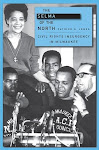
"The Selma of the North": Civil Rights Insurgency in Milwaukee
Between 1958 and 1970, a distinctive movement for racial justice emerged from unique circumstances in Milwaukee. A series of local leaders inspired growing numbers of people to participate in campaigns against employment and housing discrimination, segregated public schools, the membership of public officials in discriminatory organizations, welfare cuts, and police brutality.
The Milwaukee movement culminated in the dramatic—and sometimes violent—1967 open housing campaign. A white Catholic priest, James Groppi, led the NAACP Youth Council and Commandos in a militant struggle that lasted for 200 consecutive nights and provoked the ire of thousands of white residents. After working-class mobs attacked demonstrators, some called Milwaukee “the Selma of the North.” Others believed the housing campaign represented the last stand for a nonviolent, interracial, church-based movement.
Patrick Jones tells a powerful and dramatic story that is important for its insights into civil rights history: the debate over nonviolence and armed self-defense, the meaning of Black Power, the relationship between local and national movements, and the dynamic between southern and northern activism. Jones offers a valuable contribution to movement history in the urban North that also adds a vital piece to the national story.
Think you know the full story of the civil rights era? Patrick Jones's masterful study of the movement in Milwaukee will make you think again. Meticulously researched and elegantly written, The Selma of the North provides a devastating rebuttal of many of the conventional narratives of the civil rights movement. Here a vibrant nonviolent movement in the de-industrializing Midwest grows into a Black Power movement led by urban youth and a white Catholic priest who use confrontational direct action to lay bare the fissures of racial inequality in the 'liberal' North. --Jeanne Theoharis, Brooklyn College, editor of Freedom North and Groundwork
A well-researched, well-written, and important history. Based on a rich array of sources, this book enhances our understanding of civil rights activism in the postwar urban North and establishes a useful foundation for the comparison of similar developments elsewhere in the country. --Joe William Trotter, Jr., Carnegie Mellon University, author of Black Milwaukee
This book fills a serious gap in the literature of the civil rights revolution, joining studies on other cities in laying the groundwork on race and civil rights in the postwar urban North. Jones tells a good story, capturing events that might otherwise be lost to history. --Arnold R. Hirsch, University of New Orleans, author of Making the Second Ghetto
The Selma of the North is an insightful and invigorating addition to the growing literature on black freedom struggles outside of the South. Jones's important and informative account writes Milwaukee back into the narrative of the civil rights-Black Power era and in the process expands our understanding of postwar America. --Peniel E. Joseph, Brandeis University, author of Waiting Till the Midnight Hour
The Selma of the North is a riveting new story of the civil rights movement in America, a tale on par with Selma, Birmingham, and Montgomery in its power and importance. Jones's magisterial research and magnetic prose illuminate the untold story of the battle for the urban north in the 1960s, a battle that shows how race has always been the Achilles heel of white progressives. This story transcends easy dichotomies of black and white, North and South, radical and reformist. How did a group called 'the Commandos' define nonviolence? How did a white Catholic priest become a 'Black Power' leader? If this is not a saga for the age of Obama, I don't know what is. --Timothy B. Tyson, Duke University, author of Radio Free Dixie and Blood Done Sign My Name
I am sorry to have to be the one to break this news to all of you out there who believed in Barack Obama... The Obama campaign is all but finished, as new incontrovertible evidence has emerged linking him to domestic terrorist, Bill Ayers. The campaign has for weeks been trying to dodge and suppress theinevitable, at least until election day. But late yesterday afternoon, this explosive new"smoking gun" was delivered to the offices of Freedom Road and it has the Obama campaign reeling...
It appears true, after all, that a youthful Barry Obama, code name "The Hawaiian Lion," did, indeed, participate in the Weathermen's infamous 1969 "Days of Rage" campaign in Chicago:
(click image to enlarge)
Well, there you have it. Incontrovertible proof that Obama is a violent, communist-socialist, Muslim-Christian-liberation-theologist, elitist, drug-addled, tax & spend, America-hater! I mean, just look at him there. That is obviously the face of a hate-filledterror-monger bent on destroying the American Dream™... And, if he did it once, he'll do it again, only this time from the White House!!!
There's more... accompanying the photographic proofthat was delivered to our offices was an audio recording of Obama, JUST LAST WEEK, as he got ready to speak to a group of "community organizers," singing James Brown's subversive classic, "Funky President," and Parliament's incendiary, "Chocolate City," which features the militant black nationalist lyric, "They still call it the White House, but that's a temprorary condition" and the radical mantra, "Gainin' on ya!"...
With all the hoopla surrounding the controversial recent Obama cover of The New Yorker many missed the interesting article on the inside about Barack's time in Chicago and the way it has shaped him as a person and politician. Check it out!
There has been much controversy surrounding Barack Obama's affiliation with Trinity United Church in Chicago. Past comments by the out-going minister, Rev. Jeremiah Wright, which recently appeared on YouTube, have stirred rancor, leading Obama to publicly repudiate those comments and Wright to leave his symbolic post in Obama's campaign. I don't want to jump into the specifics of Wright's comments here at this time, but do want to offer some broader context on Obama's faith and his Church...
Before I do that, allow me to make a somewhat obvious point: Hopefully, the silver lining in all of this hoo-ha over Rev. Wright and Trinity United is that it should put to rest once and for all the bogus smear that continues to circulate on the internet and in gossip that Obama is a Muslim. Very clearly he is not and has never been Muslim. Ok? Got it? Good. Tell your friends...
Now that that is out of the way, let me go further and write the while Obama is not a Muslim, but a practicing Christian who believes that Jesus is the son of God, if he were Muslim that should be immaterial to his candidacy. Just like belief in Christianity should not be a prerequisite to elected office, in general, a belief in Islam should not rule any citizen out from running for office or serving his or her country in the political sphere.
Anyway, on to the main reason I am hitting this topic this morning...
First, here is Barack's statement yesterday about Wright's comments and his own faith journey:
Second, here is a nice YouTube by a white minister who also attends and ministers at Trinity. It is significant that she is white considering the belief out there in the media-ether that Trinity is a black-only church. It is not:
Last, here is an EXCELLENT article on Trinity, situating the church within a broader context of race and faith stretching back to the civil rights/Black Power era. I've posted this one previously, but it is well worth another look:
So, take a little time to look a little deeper into Trinity's faith community. Do some exploring for yourself and I think you will find that on balance, this is a very positive, inclusive and spirit-filled church that situates social justice at the forefront of their theology.
One of the dark, ugly sides of the civil rights era - and largely ignored or forgotten in the popular history of that time - was the "massive resistance" of many whites throughout the North to even modest attempts to address pervasive racial inequality, particularly when it came to housing. This massive resistance often equaled or exceded the more well-known episodes of white racist violence in the South during this period. A stunning example of this came in 1966 when Dr. King led a group of non-violent open housing advocates through a nasty gauntlet of thousands of screaming white residents in the Marquette Park neighborhood of Chicago. Throughout that summer, civil rights activists had marched through predominately white communities like Gage Park on the Southwest Side and Belmont Cragin on the Northwest Side to press local officials to enact an ordinance barring discrimination in the sale or rental of property. At each site the peaceful demonstrators were reminded of the bitter opposition to racial integration that thrived across the city and the nation. The level of hate in Marquette Park was particularly dazzling. White on-lookers hurled obscenities, firecrackers, sticks, rocks and debris. To the tune of the Oscar Meyer hot-dog song, choruses of, “I wish I were an Alabama trooper/This is what I would truly love to be/Because if I were an Alabama trooper/Then I could kill the niggers legally,” filled the air. A rock the size of a fist struck King in the face, knocking him to the ground in a daze. A knife, hurled by another counter-demonstrator, missed the minister, but lodged in the neck of a white marcher. One march organizer said of the white counter-demonstrators, "They were looking at a people of color and rejecting them at face value.” Afterward, a clearly rattled King told the media, “I’ve been in many demonstrations all across the South, but I can say that I have never seen---even in Mississippi and Alabama---mobs as hostile and hate-filled as I’ve seen in Chicago. I think the people from Mississippi ought to come to Chicago to learn how to hate.” And Chicago was not an isolated incident... overall that summer, 43 American cities were roiled by racial violence. The next year, in Milwaukee, an estimated 10,000 angry white residents poured into the streets to again oppose peaceful open housing marchers. There, they threw rocks, cherry-bombs, sticks, and even human feces. They held white power signs with hateful slogans and attacked demonstrators with their fists.
Why is this history not as well known as the stories of Selma, Birmingham, Montgomery and other southern locales? What are the implications of not telling these stories? What are the lessons and legacies of these northern stories of white massive resistance? And, in a broader sense, how do the narratives we create of the past affect the way we understand our present and where we need to go in the future?
As a society, we have yet to come to terms with this nasty aspect of our collective past, even though today our nation remains deeply segregated. At the dawn of the 21st century, it remains true that an influx of more than a couple black families in a white neighborhood more often than not prompts an exodus of white residents. Black residents in white neighborhoods continue to consistently report general hostility by white neighbors in the form of slights, racial slurs and, in some cases, acts of vandalism and even violence. To be sure, the system has "refined" white privilege by shrouding it in discriminatory loan and real estate practices, in institutional mechanisms that are often "invisible," at least to many white people. But, the general problem of segregation and white resistance to integrated housing remains.
...take a look at this brief documentary footage of the 1966 open housing marches in Gage Park Chicago, including remarks by Dr. King.
 (click image to enlarge)


