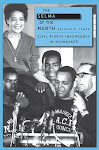


Do you know who Fannie Lou Hamer is? Everyone should...
 You may wonder what, precisely, is the big deal about gay marriage? Why has marriage become a key civil rights issue within the gay and lesbian community? Why does it matter? Well, when it comes to our civil society, the way rights, privileges and resources are dished out, it matters A LOT. Here are 1138 reasons why full marriage equality matters. This is about CIVIL RIGHTS, plain and simple. As long as society confers all these rights and privileges to married couples, EVERYONE should have access to that institution and those rights and privileges.
"[Y]ou have to give them hope. Hope for a better world, hope for a better tomorrow, hope for a better place to come to if the pressures at home got too great. Hope that all will be all right. Without hope, not only gays, but the blacks, the seniors, the handicapped, the us’es, the us’es will give up….In an audio note he left, which was to be listened to only upon his assassination, Milk wrote, "If a bullet should enter my brain, let that bullet destroy every closet door." You can listen to the audio tape here:
So if there is a message I have to give, it is that if I’ve found one overriding thing about my personal election, it’s the fact that if a gay person can be elected, it’s a green light. And you and you and you, you have to give people hope."
Let us not sit upon the ground
and tell sad stories
of the death of sanity.
Two humans made of flesh
are meshed in death
and no more need be said.
It is pure vanity
to think that all humanity
be bathed in red
because one young mad man
one so bad man
lost his head.
The force that through the red fuze
drove the bullet
does not drive everyone
through the City of Saint Francis
where there's a breathless hush
in the air today
a hush at City Hall
and a hush at the Hall of Justice
a hush in Saint Francis Wood
where no bird tries to sing
a hush on the Great Highway
and in the great harbor
upon the great ships
and on the Embarcadero
from the Mission Rock
to the Eagle Cafe
a hush on the great red bridge
a hush in the Outer Mission
and at Hunter's Point
a hush at a hot potato stand on Pier 39
and a hush at the People's Temple
where no bird
tries its wings
a hush and a weeping
at the Convent of the Sacred Heart
on Upper Broadway
a hush upon the fleshpots
of Lower Broadway
a pall upon the punk rock
at Mabuhay Gardens
and upon the cafes and bookstores
of old North Beach
a hush upon the landscape
of the still wild West
where two sweet dudes are dead
and no more need be said.
Do not sit upon the ground and speak
of other senseless murderings
or worse disasters waiting
in the wings.
Do not sit upon the ground and talk
of the death of things beyond
these sad sad happenings.
Such men as these do rise above
our worst imaginings.
 Along with Obama's inspiring, historic victory came some electoral disappointments, too. In Nebraska, voters decided to amend the state constitution to ban state affirmative action programs. And in three states, basic civil rights for gays and lesbians were curtailed. Most notably, California residents overturned a recent court decision which had legalized gay marriage.
 If individuals perform their jobs well, if they are good students or good human resource managers, then they should be allowed to continue in their positions. Until their actions in the workplace create harm -- dismissals based on political affiliation should not be encouraged.
This movement for equal rights is based on the fundamental belief in the equal protection of the law. That means equal protection for us, but it also means equal protection for the people who hate us. We can create an effective movement for full protection for LGBT people under the Constitution without working to unemploy individuals who, because of faith or bigotry, don't think we deserve to be treated equally. That is a movement of which we can all be proud.
Tomorrow night, Joe Biden and Sarah Palin will meet in their only vice-presidential debate. Most of the discussion will be about economics and foreign policy. On the social issues, here are two questions moderator Gwen Ifill should ask.
• Gov. Palin, you were asked this week whether it should be illegal for a girl to get an abortion in the case of rape or incest. Your answer was that the girl herself should not go to jail. What about the doctor? Should the doctor who performs that abortion face criminal penalties?
• Sen. Biden, you said four weeks ago that you believe life begins at conception but that you can't impose your personal beliefs on other people. Yet you also voted for a law against gay marriage called the Defense of Marriage Act, and two years ago, you said this law expresses your view that "marriage is between a man and a woman and states must respect that." Why is it OK to impose your beliefs on gay marriage but not on abortion?
Here's all the background information Ifill will need when the candidates start fudging...
• Palin's interview with Katie Couric, aired yesterday:
Couric: "If a 15-year-old is raped by her father, you believe it should be illegal for her to get an abortion. Why?"
Palin:"I am pro-life. And I'm unapologetic about my position there on pro-life. And I understand good people on both sides of the abortion debate. In fact, good people in my own family have differing views on abortion and when it should be allowed. So ... I respect people's opinion on this. ..."
Couric: "But, ideally, you think it should be illegal for a girl who was raped or the victim of incest to get an abortion? "
Palin: "I'm saying that, personally, I would counsel the person to choose life, despite horrific, horrific circumstances that this person would find themselves in. And, um, if you're asking, though, kind of foundationally here, should anyone end up in jail for having an ... abortion, absolutely not."
• Biden on Meet the Press, Sept. 7, 2008:
Biden: "I'm prepared as a matter of faith to accept that life begins at the moment of conception. But that is my judgment. For me to impose that judgment on everyone else who is equally and maybe even more devout than I am seems to me is inappropriate in a pluralistic society. ..."
Tom Brokaw: "But if you, you believe that life begins at conception, and you've also voted for abortion rights."
Biden: "No, what [I] voted against curtailing the right, criminalizing abortion. I voted against telling everyone else in the country that they have to accept my religiously based view that it's a moment of conception."
• Biden's recorded vote for DOMA, Sept. 10, 1996.
• Biden on Meet the Press, June 4, 2006:
"We already have a law, the Defense of Marriage Act. We've all voted—not, where I've voted, and others have said, look, marriage is between a man and a woman and states must respect that. Nobody's violated that law, there's been no challenge to that law."
• Biden on CNN, June 5, 2006:
"We have already passed a law saying that—and the Defense of Marriage Act, defining marriage between a man and a woman."
• The Biden campaign's evasive response to a same-sex marriage question on the Human Rights Campaign's 2007 survey of presidential candidates:
"Senator Biden supports letting states determine how to recognize civil unions and how to define marriage. He believes that legal recognition should not be denied to same-sex couples."
Bonus peg: Biden will speak at HRC's annual dinner Saturday night.
All yours, Gwen. Go for it.
"[Y]ou have to give them hope. Hope for a better world, hope for a better tomorrow, hope for a better place to come to if the pressures at home got too great. Hope that all will be all right. Without hope, not only gays, but the blacks, the seniors, the handicapped, the us’es, the us’es will give up….In an audio note he left, which was to be listened to only upon his assassination, Milk wrote, "If a bullet should enter my brain, let that bullet destroy every closet door." You can listen to the audio tape here:
So if there is a message I have to give, it is that if I’ve found one overriding thing about my personal election, it’s the fact that if a gay person can be elected, it’s a green light. And you and you and you, you have to give people hope."
Let us not sit upon the ground
and tell sad stories
of the death of sanity.
Two humans made of flesh
are meshed in death
and no more need be said.
It is pure vanity
to think that all humanity
be bathed in red
because one young mad man
one so bad man
lost his head.
The force that through the red fuze
drove the bullet
does not drive everyone
through the City of Saint Francis
where there's a breathless hush
in the air today
a hush at City Hall
and a hush at the Hall of Justice
a hush in Saint Francis Wood
where no bird tries to sing
a hush on the Great Highway
and in the great harbor
upon the great ships
and on the Embarcadero
from the Mission Rock
to the Eagle Cafe
a hush on the great red bridge
a hush in the Outer Mission
and at Hunter's Point
a hush at a hot potato stand on Pier 39
and a hush at the People's Temple
where no bird
tries its wings
a hush and a weeping
at the Convent of the Sacred Heart
on Upper Broadway
a hush upon the fleshpots
of Lower Broadway
a pall upon the punk rock
at Mabuhay Gardens
and upon the cafes and bookstores
of old North Beach
a hush upon the landscape
of the still wild West
where two sweet dudes are dead
and no more need be said.
Do not sit upon the ground and speak
of other senseless murderings
or worse disasters waiting
in the wings.
Do not sit upon the ground and talk
of the death of things beyond
these sad sad happenings.
Such men as these do rise above
our worst imaginings.
 Pulitzer Prize-winning historian, Robert Caro, is one of the foremost scholars on Lyndon Johnson. The day of Barack Obama's historic acceptance speech at Invesco Field in Denver, which was also the 45th anniversary of the March On Washington and Dr. King's "I Have a Dream" speech, he wrote a fascinating opinion piece - "Johnson's Dream, Obama's Speech" - in the NYTimes on LBJ, voting rights and Obama. In short, Caro argues that Obama's speech might not have been possible if it had not been for another speech, made by Johnson 43 years earlier, a speech that was so powerful it made Martin Luther King, Jr., cry... It is worth a read.
 California's Supreme Court struck a blow for civil rights and full equality for all citizens today when it overturned that state's ban on gay marriage, making California the second state where gay and lesbian residents can marry. Kudos to the left coasters for getting with the program. 2 states down, 48 more to go...
 A few days ago, one of the lesser known heros of the early civil rights era - Mrs Johnnie Carr - died at the age of 97. Mrs. Carr was a childhood friend of Rosa Parks who also played an active role in the Montgomery Bus Boycott. She was close with Dr. Martin Luther King, Jr., and took over the reigns of the Montgomery Improvement Association in 1967, a post she held until her death. The MIA was originally formed in 1955 to support the bus boycott. Mrs. Carr was an ardent supporter of civil and human rights for over 50 years.
 When I teach about music in my African American Studies classes, I often use a framework articulated to me by one of my friends and mentors at the University of Wisconsin-Madison, Craig Werner. It is very useful in helping students, many of whom are not used to listening deeply to music and/or who might not be familiar with African American culture, hear "black music" in new and constructive ways.
  I'm heading to Milwaukee tomorrow for the 40th anniversary celebration/commemoration of that city's landmark open housing demonstrations. From 1966-1968, housing, along with police brutality, was one of the most important, but contentious, issue in the northern struggle for racial justice. In 1966, thousands of white erupted in violence outside of Chicago when Martin Luther King led a march for fair housing. In Milwaukee, from August 1967 through April 1968, Vel Phillips, Fr. James Groppi, the NAACP Youth Council and Commandos led 200 consecutive nights of marching in order to force passage of a city-wide fair housing ordinance. In response, thousands of hostile local whites attacked peaceful marchers on the white ethnic south side of the 16th street viaduct in scenes eerily similar to the violence at the foot of the Edmund Pettus Bridge in Selma, Alabama, in 1965. Yet, local activists and their supporters were not deterred. When Fr. Groppi made an ecumenical call for support, hundreds of people from across the country poured into the city to bear witness and march. With Black Power sweeping the Movement, the Milwaukee open housing campaign was seen by many as a "last stand for an integrated, non-violent, church-based movement." In the wake of King's assassination in early April, 1964, the Milwaukee Common Council finally passed a tough local ordinance barring racial discrimination in the sale or rental of local property. The Milwaukee campaign also contributed to passage of the historic 1968 Fair Housing Act.
 Support today's national day of protest in support of the Jena 6. Wear black. Talk to your friends and neighbors about this incident. Oppose racism in all forms, in Louisiana and in your own backyard...
  I grew up in Cleveland and have been a long-suffering Indians fan since I was a kid (and, by the way, aren't Cleveland sports fans the longest and deepest suffering fans of all??!! But I digress, that is a separate post altogether...). The Indians have the honor of being the first American League team to have a black player, Larry Doby. That made Doby the second African American player, overall, in Major League Baseball, eleven weeks behind Jackie Robinson. Unfortunately, Robinson's fame overshadowed Doby's accomplishment. In addition to integrating the AL, Doby was a 7-time All-Star and key piece to Cleveland's last World Series... in 1948... and their record 111 wins in 1954. Despite his achievements, baseball largely forgot Doby until 1997 - the same year MLB retired Jackie Robinson's number throughout the league. That year, as MLB took its traveling lovefest for Robinson across the country, a Sports Illustrated editorial pointed out that Doby had faced the same trials as Robinson, only without the media attention or support.
  Finally, in 1998, long overdue, the Veterans Committee of MLB elected Doby to the Hall of Fame. Larry Doby died in 2003.
 Nancy MacLean, a well-known History professor at Northwestern University, has written an excellent article over at History News Network on the ideological origins of Chief Justice John Roberts's recent decision to oppose the use of race in public school integration plans. According to MacLean, "[Roberts's] opinion has its lineage in a well-documented conservative strategy to hijack civil rights rhetoric to roll back advances toward substantive equality." She continues, "[Historically, conservatives have] used their peculiar readings of the Constitution to limit what democratic government could do for its citizens, an approach embraced today by the Federalist Society and the conservative block on the Supreme Court. [Conservatives] fought the quest for social justice at every turn. They urged the defeat of the Civil Rights Act of 1964, the Voting Rights Act of 1965, and every measure to promote true fairness thereafter."
  Democracy Now! has the latest on the Jena case, including coverage of the march and demonstration there yesterday:


