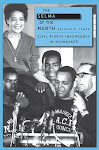

Looks interesting:
Here is an article on the film from The Root.
Seen any good films lately?
Showing posts with label african american. Show all posts
Showing posts with label african american. Show all posts
Friday, February 27, 2009


Sunday, January 25, 2009
Howard Thurman on Spiritual Experience
It is Sunday, here is Howard Thurman, who was one of the important influences on Dr. Martin Luther King, Jr., discussing the ever-evolving and dynamic experience of spirituality (2 minutes in length):
Here is a GREAT article from The Atlantic in 1953 about Dr. Thurman, his life and philosophy. Check it out!
What do you think?
Here is a GREAT article from The Atlantic in 1953 about Dr. Thurman, his life and philosophy. Check it out!
What do you think?
Wednesday, January 07, 2009
Has Obama Changed the Politics of Race?
 According to a recent "News Analysis" piece in the L.A. Times by Peter Wallsten, Obama's election is "changing the politics of race." Wallsten contends: "Many black leaders are rejecting the old tactics of protest and the rhetoric of inequality. 'You can't use 50-year-old ideas in a new political era,' one pastor says."
I am ambivelent about these kinds of arguments. On one hand, it is true that 2008 is not 1958 or 1968, so we need to craft a political vision and political rhetoric that speaks to our own historical reality. No doubt about that. Yet, I'm not as comfortable "rejecting the rhetoric of inequality," when racial inequality is so readily apparent and persistent throughout American society. Heck, in my own city - Omaha - 60% of all African American children live in poverty. 60%!! If 60% of all white kids lived in poverty, the city and state would literally stop and make herculean efforts to deal with it, including pouring zillions of dollars into various programs to help white kids and their families out. Or, recently the Omaha World Herald ran two articles in the same week, one on an affluent white school in West Omaha where the public school is buying each kid a laptop (talk about the rich getting richer!) and the other on a school in the poorer and blacker North Side where parents are being charged an extra $5 just to provide basic materials to their kids, like paper. The inequalities are glaring and shameful. And we just went through an election, right? So surely the various political candidates all blustered on about the massive inequality in North Omaha (the third poorest black community in the United States)? Wrong. Not one candidate said a peep about black children or North Omaha, or economic or racial inequality. Nothing. Nada.
In a way, this effort to move away from the politics of grievance seems, in part, to reflect the class position of some leaders who themselves have made it to the middle-class or above, but more significantly, it appears to me to be an accommodation to the fact that most Americans are clueless about the reality not only of our racial past, but also of our racial present. Most have no clue what race is, how it works and persists, what is different from the civil rights era and what remains to be done. And, I fear this kind of political positioning, while strategically smart on some levels, might also reinforce the idea among many white folks that we are "beyond race" and that black people and other aggrieved groups simply play the "victim card" all the time in some unjustified way. A HUGE part of the remaining solution to racial inequality is a new consciousness among enough white people, a consciousness that is not mired in white guilt, but looks honestly at racial inequality in America, that places that inequality in its proper historical context and which owns up to the fact that we ALL are responsible for this mess and for cleaning it up!
What do you think?
Thursday, December 18, 2008

Thursday, December 11, 2008
Wednesday, November 12, 2008
Wednesday, November 05, 2008

Friday, October 10, 2008
Could North Omaha Win Obama One Electoral Vote in Nebraska?
 That is the argument many folks around here are making. For those not in the know, North Omaha is the section of town where most black residents live. It is also the third poorest African American community in the entire nation and the very poorest in the U.S. for black children. A full 59% of all African American kids grow up in poverty here. You read that right: 6 out of 10 black children are poor in North O. And, the saddest reality is that most white Omahans, and most white Nebraskans, either have no clue about the desperate straights of North Omaha, or simply do not care. North Omaha is not an election issue. Politicians pimp for votes among the residents here, but they do it on the down low and never actually raise the pertinent local issues in their campaigns. Neither Scott Klebb, the moderate Democrat running for U.S. Senate against former Republican Governor and Bush Ag Secretary Mike "Snoozer" Johanns, nor Jim Esch, another moderate Democrat running against conservative Republican Lee "helmut hair" Terry, Jr., for a spot in the House of Representatives says much of anything at all about the offensive racial and economic inequalities evident in North O. It is a tragedy and a shame. So, for North Omaha to be the decisive balance that wins Obama an electoral vote here in Nebraska would be deliciously ironic. A downtrodden, and fairly poweless, community delivering for our nation's first black president! I'd love to see that come to pass...
... but even if it does, an Obama presidency, in itself, will do little to change the reality in North Omaha. For that, we need a grassroots movement to pressure officials in power at the local, county, state and federal levels. And for that, we will need a radical shift in consciousness among whites, a development that is unlikely, to say the least. There will need to be a new sense that the metro area is an organic whole, where we all bear responsibility to uplift those neighborhoods that are struggling most. Residents of all races and ethnicities will have to be willing to grapple with the reasons behind North Omaha's deterioration, the history and legacy of racial injustice, divestment, abondonment and neglect. And, it will take a massive infusion of resources, private and public, combined with vigorous effort/action, again privately and publicly, to revitalize this hard-hit area of our city. Nothing short of this will make a difference. And, keep in mind, this is not purely a local story. This is a pattern repeated in medium and large city after medium and large city across the country. There is a national urban crisis. This is a national tragedy, a national shame.
So, as much as election day, 2008, might be a nice day for residents of North O, if in fact they can deliver the goods to Obama, it is not the end of the story. In fact, it doesn't even scratch the surface of what needs to happen most around here and across the nation in poor, urban, segregated communities of color.
Saturday, August 30, 2008
Lest We Forget... Katrina Three Years Later
 Please take some time away from the presidential election to reflect on the memory, meaning and ongoing tragedy of Hurricane Katrina, three years later. here are a few resources:
Magnum Photo reminds us what happened three years ago with a powerful photo essay.
Over at DailyKos, Bill in Portland Maine has put together "the Hurricane Katrina Hall of Shame." Well worth this walk down memory lane.
American Public Radio's "Speaking of Faith" put together a great audio story, with lots of resources, on poverty after Katrina.
Bill Quigley explores the "pain index" in New Orleans three years later.
Larry Blumenfeld writes about music, culture and recovery in New Orleans.
Kai Wright, in "Katrina, the Ultimate Party Crasher," reminds us how far we have yet to go in bringing back one of our nation's most beloved cities.
Lizzy Ratner explores the way New Orleans has redrawn the color line after Katrina.
Deepa Fernandes writes that three years on, homelessness looms for many of Katrina's victims.
Fernandes also writes about FEMA's toxic trailers.
Stuart Klawans reviews the new Katrina documentary, "Trouble the Water," a film which prompted N.O. mayor Ray Nagin to walk out.
Black Agenda Report suggests we are in "the age of Katrina," not the age of Obama.
Here is a will.i.am-style Obama video using New Orleans great, Alain Toussaint's, classic, "Yes We Can Can":
Tuesday, July 01, 2008
Mildred Brown and the Omaha Star
 One of my Ph.D. students, Amy Forss, is working on a dissertation on Mildred Brown, the co-founder and long-time editor of the Omaha Star, the local African American newspaper here in Nebraska's biggest city. What makes Brown unique is the central role she played in establishing, building and editing a major newspaper. She is one of the very few women during the mid-20th century in such a prominent newspaper position; men tended to dominate the field (as they still do!).
Amy recently passed her comprehensive exams and is moving forward on the dissertation. In the meantime, she has written a cover story on Mildred Brown for Omaha's free weekly, The Reader. Check it out!
Wednesday, June 18, 2008
Reprise: Dick Gregory for President!!
 (This is a repost of a previous entry, but given Obama's historic nomination by the Dems, I thought it made sense to give it some more air time)
Given all the hoopla over a prospective Obama presidency, I thought I'd pay a little tribute to some of the previous African Americans who made a run for the highest office in the land. In this post, I focus on Dick Gregory, who ran in 1968 with Mark Lane on the Freedom & Peace ticket.
Dick Gregory was born in St. Louis in 1932. While in the Army, Gregory's commanding officers noticed he was a joker and encouraged him to take his comedic skills to the military talent show, which he won several times. After completing his service, he worked at the Chicago Playboy Club, where Hugh Hefner was impressed by Gregory's ability to wow white audiences. Here was the portion that impressed Hef:
Good evening ladies and gentlemen. I understand there are a good many Southerners in the room tonight. I know the South very well. I spent twenty years there one night.
Last time I was down South I walked into this restaurant and this white waitress came up to me and said, "We don't serve colored people here." I said, "That's all right. I don't eat colored people. Bring me a whole fried chicken."
Then these three white boys came up to me and said, "Boy, we're givin' you fair warnin'. Anything you do to that chicken, we're gonna do to you." So I put down my knife and fork, I picked up that chicken and I kissed it. Then I said, "Line up, boys!"
The Playboy Club launched him to national television notoriety in the early-60s as one of the first comics to find success in front of black and white audiences. In 1964, Gregory published an autobiography, controversially titled, Nigger, which sold 4 million copies. Gregory's comedic and personal style was inflammatory and uncompromising, titillating many, shocking others and angering some. Around the same time, Gregory became active in the civil rights movement and participated in many of the most significant marches and demonstrations of the era.
Here is a speech he gave in Birmingham in 1963 on the day more people got arrested than any other day in the entire history of the civil rights movement: Speech at St. John's Baptist Church, Birmingham, Alabama, 1963
Ultimately, Gregory also became an ardent opponent of the war in Vietnam and championed numerous other progressive causes. In 1967, Gregory ran an unsuccessful campaign for Mayor of Chicago against notorious political boss, Richard Daley.
In 1968, Dick Gregory again tried his hand at politics, this time as the Presidential nominee for the Freedom & Peace Party a splinter group from the Peace & Freedom Party, a party that emerged out of the civil rights and anti-war movements. Interestingly, the Peace & Freedom Party elected Eldridge Cleaver in '68, the incendiary Minister of Information for the Black Panther Party. During the campaign, Gregory supporters at the Operation Breadbasket office in Chicago created fake dollar bills with Gregory's face on them. They are really funny. Here it is (click to enlarge):

Not surprisingly, the feds didn't have much of a sense of humor about the whole thing, particularly after some made it into circulation, but the stunt did gain the activist some easy publicity at a time when many were more than willing to stick it to The Man. It also landed him on Nixon's master list of political opponents! Gregory earned more than 47,000 votes in the election, or .06% of the total, including one from hunter S. Thompson. He finished just behind the Socialist Labor Party candidate, but ahead of Prohibition Party and Communist Party candidates. Sadly, George Wallace, the racist Democratic Governor of Alabama and godfather of modern conservatism, received about 210 times more votes (almost 10 million!) than Gregory...
The same year as the campaign, Gregory wrote, Write Me In! The book is really funny and interesting and worth a read, even today. Here are a few of the things he put forth:
• Gregory argued that the one qualification we should seek in a Presidential candidate is "a sensitivity to human need."
• He encouraged citizens to smash the two party system. Gregory wrote that he did not vote in the 1964 Presidential election because "I refused to be the victim of having to choose between the lesser of two evils."
• In a passage that speaks forcefully to our current international predicament, he wrote, "America speaks with pride of the fruits of democracy and advocates democracy for the rest of the world. Yet we go all over the world trying to force democracy upon people at gunpoint."
• Gregory argued that the U.S. Constitution had never been fully implemented and suggested, therefore, that before we talk about changing it we actually see how life in America would change if we followed the Constitution. He wrote, "I have a dream and a vision of seeing the Constitution of the United States implemented in full for the first time in American history."• Gregory promised that his administration would give American citizens what he termed, "The Clean Society." He wrote that one of his first acts as Prez would be to set aside half of his Presidential salary as a reward for any information leading to his arrest and conviction for wrongdoing in office. Further he proposed to place into escrow $10,000 for each Senator and Congressman also as a reward for information of wrong doing in office. This combined sum (around $5 million dollars he estimated) was small in comparison to the federal government's annual budget. Yet the rewards for taking political corruption seriously were profound.
• Gregory also proposed a corporate tax on "excess-profits."
• He also wrote, "I will propose legislation to allow American taxpayers to bring suit against the federal government challenging the spending of a sizable portion of the national budget for a possibly illegal war." And, " Any time American troops are being used overseas as a result of orders by the commander-in-chief, the question of the constitutionality of such action should be immediately raised."
• Gregory pledged to respect international law and order and to create renewed respect for the United Nations. He wrote, "I will urge a redistribution of power in the UN so that every nation has an equal voice [...] " Further he proposes that the UN flag become as recognizable as corporate logos, the flag announcing to people the world over that "colors, religions and political orientations place no restriction upon membership in the human family."
• In an interesting passage, he argued, "America must re-evaluate what is meant by developing 'stronger' nations. A nation that is well equipped militarily, yet plagued with disease, hunger and ignorance, is not really strong."
• Gregory wanted to see America taking leadership in eliminating world hunger and he proposed to have elementary school children contribute a penny a week and for adults to give up one meal each week with the proceeds from both to be used to feed the hungry.
• Gregory proposed using tax rebates as incentives for companies which establish fair employment practices.
• Gregory suggested reforms for fire and police departments as well as the criminal justice system and the courts. "As President," he wrote, "I will make every effort to free the court system from political ties. I will seek federal legislation to rule out the concept of judgeship by political appointment."
• Finally, Gregory advocated the elimination of capital punishment. He sought a criminal justice system that accomplished rehabilitation of the criminal rather than merely punishment.

Yeah, that is pretty amazing, isn't it??!!!
Gregory has continued to fight the good fight since 1968, going on numerous hunger strikes for various causes. On July 21, 1979, Gregory appeared at the Amandla Festival, otherwise know as the "Festival of Unity," held at Harvard Stadium in Boston. The idea behind the event was to show support for freedom across southern Africa and to encourage racial healing in Boston, a city torn by racial discord. Bob Marley, Patti LaBelle and Eddie Palmieri, and others, also performed. In 1980, he attempted to negotiate the release of American hostages in Iran. He and his former running mate, Mark Lane, wrote a fascinating book about the assassination of Martin Luther King, Jr., Code Name Zorro, which argued that James Earle Ray did not act alone in that historic tragedy.
More recently, Gregory has gotten a little far out at times, advocating a variety of conspiracy theories and a radical health diet that he claims saved him from cancer.
In one of the more bizarre recent episodes, Michael Jackson's father asked Gregory to advise Michael on his diet during his 2005 trial for child molestation. On June 4 of that year, Gregory brought a blood-circulating machine to Jackson's house, but Jackson refused to use it.
Here I am with Dick Gregory on September 29, 2007, in Milwaukee! Seriosuly.

What the heck am I doing with Dick Gregory? Well, we were both participating in the "March On Milwaukee" 40th anniversary celebration of the historic open housing campaign there. I am writing a book about the civil rights movement in Milwaukee and spoke at the conference. Gregory was an important activist in that movement. In 1968, he praised the Movement in Milwaukee, which many called "the last stand for an non-violent, interracial, church-based movement," and which was led by a white Catholic priest named Fr. James Groppi, for showing that Black Power was "more an attitude than a color." Mr. Gregory was amazingly kind and gracious to everyone throughout the weekend... and funny as hell. Holy Moses, this guy can let the jokes fly. He's still got the edge, too. He seemed to me to be one of those people that is simultaneously brilliant and a little mad; many of the great ones are, after all. Provocative ideas come fast and furious...
This is a clip of Gregory more recently "revoking Bill Clinton's blackness":
Here's to you, Mr. Gregory! Thanks for blazing a trail and fighting for justice...
Friday, January 11, 2008
Dick Gregory for President!??!!
Given all the hoopla over a prospective Obama presidency, I thought I'd pay a little tribute to some of the previous African Americans who made a run for the highest office in the land. In this post, I focus on Dick Gregory, who ran in 1968 with Mark Lane on the Freedom & Peace ticket.Dick Gregory was born in St. Louis in 1932. While in the Army, Gregory's commanding officers noticed he was a joker and encouraged him to take his comedic skills to the military talent show, which he won several times. After completing his service, he worked at the Chicago Playboy Club, where Hugh Hefner was impressed by Gregory's ability to wow white audiences. Here was the portion that impressed Hef:
Good evening ladies and gentlemen. I understand there are a good many Southerners in the room tonight. I know the South very well. I spent twenty years there one night.
Last time I was down South I walked into this restaurant and this white waitress came up to me and said, "We don't serve colored people here." I said, "That's all right. I don't eat colored people. Bring me a whole fried chicken."
Then these three white boys came up to me and said, "Boy, we're givin' you fair warnin'. Anything you do to that chicken, we're gonna do to you." So I put down my knife and fork, I picked up that chicken and I kissed it. Then I said, "Line up, boys!"
The Playboy Club launched him to national television notoriety in the early-60s as one of the first comics to find success in front of black and white audiences. In 1964, Gregory published an autobiography, controversially titled, Nigger, which sold 4 million copies. Gregory's comedic and personal style was inflammatory and uncompromising, titillating many, shocking others and angering some. Around the same time, Gregory became active in the civil rights movement and participated in many of the most significant marches and demonstrations of the era.
Here is a speech he gave in Birmingham in 1963 on the day more people got arrested than any other day in the entire history of the civil rights movement: Speech at St. John's Baptist Church, Birmingham, Alabama, 1963
Ultimately, Gregory also became an ardent opponent of the war in Vietnam and championed numerous other progressive causes. In 1967, Gregory ran an unsuccessful campaign for Mayor of Chicago against notorious political boss, Richard Daley.
In 1968, Dick Gregory again tried his hand at politics, this time as the Presidential nominee for the Freedom & Peace Party a splinter group from the Peace & Freedom Party, a party that emerged out of the civil rights and anti-war movements. Interestingly, the Peace & Freedom Party elected Eldridge Cleaver in '68, the incendiary Minister of Information for the Black Panther Party. During the campaign, Gregory supporters at the Operation Breadbasket office in Chicago created fake dollar bills with Gregory's face on them. They are really funny. Here it is (click to enlarge):
Not surprisingly, the feds didn't have much of a sense of humor about the whole thing, particularly after some made it into circulation, but the stunt did gain the activist some easy publicity at a time when many were more than willing to stick it to The Man. It also landed him on Nixon's master list of political opponents! Gregory earned more than 47,000 votes in the election, or .06% of the total, including one from hunter S. Thompson. He finished just behind the Socialist Labor Party candidate, but ahead of Prohibition Party and Communist Party candidates. Sadly, George Wallace, the racist Democratic Governor of Alabama and godfather of modern conservatism, received about 210 times more votes (almost 10 million!) than Gregory...
The same year as the campaign, Gregory wrote, Write Me In! The book is really funny and interesting and worth a read, even today. Here are a few of the things he put forth:
• Gregory argued that the one qualification we should seek in a Presidential candidate is "a sensitivity to human need."
• He encouraged citizens to smash the two party system. Gregory wrote that he did not vote in the 1964 Presidential election because "I refused to be the victim of having to choose between the lesser of two evils."
• In a passage that speaks forcefully to our current international predicament, he wrote, "America speaks with pride of the fruits of democracy and advocates democracy for the rest of the world. Yet we go all over the world trying to force democracy upon people at gunpoint."
• Gregory argued that the U.S. Constitution had never been fully implemented and suggested, therefore, that before we talk about changing it we actually see how life in America would change if we followed the Constitution. He wrote, "I have a dream and a vision of seeing the Constitution of the United States implemented in full for the first time in American history."
• Gregory also proposed a corporate tax on "excess-profits."
• He also wrote, "I will propose legislation to allow American taxpayers to bring suit against the federal government challenging the spending of a sizable portion of the national budget for a possibly illegal war." And, " Any time American troops are being used overseas as a result of orders by the commander-in-chief, the question of the constitutionality of such action should be immediately raised."
• Gregory pledged to respect international law and order and to create renewed respect for the United Nations. He wrote, "I will urge a redistribution of power in the UN so that every nation has an equal voice [...] " Further he proposes that the UN flag become as recognizable as corporate logos, the flag announcing to people the world over that "colors, religions and political orientations place no restriction upon membership in the human family."
• In an interesting passage, he argued, "America must re-evaluate what is meant by developing 'stronger' nations. A nation that is well equipped militarily, yet plagued with disease, hunger and ignorance, is not really strong."
• Gregory wanted to see America taking leadership in eliminating world hunger and he proposed to have elementary school children contribute a penny a week and for adults to give up one meal each week with the proceeds from both to be used to feed the hungry.
• Gregory proposed using tax rebates as incentives for companies which establish fair employment practices.
• Gregory suggested reforms for fire and police departments as well as the criminal justice system and the courts. "As President," he wrote, "I will make every effort to free the court system from political ties. I will seek federal legislation to rule out the concept of judgeship by political appointment."
• Finally, Gregory advocated the elimination of capital punishment. He sought a criminal justice system that accomplished rehabilitation of the criminal rather than merely punishment.
Yeah, that is pretty amazing, isn't it??!!!
Gregory has continued to fight the good fight since 1968, going on numerous hunger strikes for various causes. On July 21, 1979, Gregory appeared at the Amandla Festival, otherwise know as the "Festival of Unity," held at Harvard Stadium in Boston. The idea behind the event was to show support for freedom across southern Africa and to encourage racial healing in Boston, a city torn by racial discord. Bob Marley, Patti LaBelle and Eddie Palmieri, and others, also performed. In 1980, he attempted to negotiate the release of American hostages in Iran. He and his former running mate, Mark Lane, wrote a fascinating book about the assassination of Martin Luther King, Jr., Code Name Zorro, which argued that James Earle Ray did not act alone in that historic tragedy.
More recently, Gregory has gotten a little far out at times, advocating a variety of conspiracy theories and a radical health diet that he claims saved him from cancer.
In one of the more bizarre recent episodes, Michael Jackson's father asked Gregory to advise Michael on his diet during his 2005 trial for child molestation. On June 4 of that year, Gregory brought a blood-circulating machine to Jackson's house, but Jackson refused to use it.
Here I am with Dick Gregory on September 29, 2007, in Milwaukee! Seriosuly.
What the heck am I doing with Dick Gregory? Well, we were both participating in the "March On Milwaukee" 40th anniversary celebration of the historic open housing campaign there. I am writing a book about the civil rights movement in Milwaukee and spoke at the conference. Gregory was an important activist in that movement. In 1968, he praised the Movement in Milwaukee, which many called "the last stand for an non-violent, interracial, church-based movement," and which was led by a white Catholic priest named Fr. James Groppi, for showing that Black Power was "more an attitude than a color." Mr. Gregory was amazingly kind and gracious to everyone throughout the weekend... and funny as hell. Holy Moses, this guy can let the jokes fly. He's still got the edge, too. He seemed to me to be one of those people that is simultaneously brilliant and a little mad; many of the great ones are, after all. Provocative ideas come fast and furious...
Here's to you, Mr. Gregory! Thanks for blazing a trail and fighting for justice...
Wednesday, January 09, 2008
Democracy Now! Explores Obama, the African American Community and the Politics of Race

Democracy Now! has run two interesting segments over the past few days on Obama and the politics of race that I think are worth checking out.
Episode #1: "Barack Obama and the African American Community: A Debate with Michael Eric Dyson and Glen Ford"
Obama and the African American Community: Dyson vs. Ford
(as always, you can listen to the program, watch it or read the transcript)
Does Barack Obama present a hope for dealing with African American issues? Or has he watered down his platform to appeal to white voters? Georgetown University Professor Michael Eric Dyson and veteran journalist Glen Ford debate.
Episode #2: “I Respect the Distance He is Trying to Create”–Jesse Jackson on Why He Supports But Hasn’t Been Asked to Campaign for Obama
Jesse Jackson discusses the Obama campaign
(as always, you can listen to the program, watch it or read the transcript)
The Reverend Jesse Jackson and his son, Rep. Jesse Jackson, Jr., support Barack Obama, but his other son, Yusuf, is a fundraiser for Hillary Clinton, and his wife has just cut a radio ad for her. Why isn’t Jesse Jackson out stumping for his man? He hasn’t been asked. “I respect the distance [Obama] is trying to create for his own strategic purposes,” Jackson tells Democracy Now!
Wednesday, November 07, 2007
Does Obama "Matter"?
 Hhhhhmmmmmmm... There seems to be some new instability in the Democratic race for the presidency, a shift in energy. Recent polling data indicates there might be some movement in the numbers, with Hillary losing 3-5% over the last week or so. Is this a blip or a trend? Time will tell. But, clearly Obama has been energized and emboldened a bit recently and Edwards continues to level the hardest-hitting criticisms against Clinton. The perception has sunk in that Hillary stumbled in the last debate, denting the air of inevitability that had followed her campaign. And when they tried to regain their footing this past week, the attempt seemed awkward and defensive. Moreover, Bill has been taking an increasingly public role in articulating Hillary's vision and defending her against mounting criticism and I'm not sure this is a winning strategy in the end. With a little blood in the water, a number of new groups have cropped up from the liberal-left side of the political spectrum challenging Hillary's campaign. One such group, Democratic Courage, argues that "Hillary Clinton has repeatedly given in too easily to pressure - and too often decides her policies not on the basis of what's right, but on the basis of what polls and focus groups tell her. As history shows, that's a dangerous road for Democrats and for the country. We believe there are other candidates who would be stronger leaders and have a much better chance of winning in 2008."
But this "disturbance in the force" that is the Clinton Campaign has me thinking again about what exactly is at the heart of Obama's appeal, his rock-star persona. Is there any there there? Of course, Obama has said ad nauseum that he is the candidate of "change," the one to "turn the page." He is relatively young, clearly smart and charismatic, multi-racial, internationally experienced, hip and good-looking. He has painted himself as the first "post-civil rights" black presidential candidate and has stressed unity and common purpose. Admittedly, one thing that has worked to Obama's advantage in the early phases of the campaign has been the fact that he was relatively unknown and thus people have been able to pour into him whatever political hopes and aspirations they possess. The idea of Obama is certainly great...
And still, I wonder - and am asking - what is it about Obama? Does Obama matter and if so, how and why exactly? For many, he remains elusive. How do we find out?
Maybe his recent speeches contain some clues...
• "A Challenge for Our Times"
• "A Change We Can Believe In"
• "Reclaiming the American Dream"
Or, maybe we can learn something about him by looking at the legislation on Iran he recently introduced in Congress.
Or, perhaps his surprise appearance on Saturday Night Live is revealing?
Or, geez, it seems like writers for every major magazine have an opinion about why Obama might matter. Here's what a few of them have to say:
James Traub, "Is (His) Biography (Our) Destiny" (New York Times Magazine)

Obama’s supporters believe that his life story and the angle of vision it affords him hold out the possibility of curing the harm they would say we have done to ourselves through our indifference to the views of others and through the insularity of a president who seems so incurious about the world. There is thus an emblematic force to Obama’s candidacy.
Larissa MacFarquhar, "The Conciliator," (The New Yorker)
Obama’s detachment, his calm, in small venues, is less professorial than medical—like that of a doctor who, by listening to a patient’s story without emotional reaction, reassures the patient that the symptoms are familiar to him. It is also doctorly in the sense that Obama thinks about the body politic as a whole thing. If you are presenting a problem as something that they have perpetrated on us, then whipping up outrage is natural enough; but if you take unity seriously, as Obama does, then outrage does not make sense, any more than it would make sense for a doctor to express outrage that a patient’s kidney is causing pain in his back. There is also, of course, a racial aspect to this. “If you’re a black male, you don’t have to try hard to impress people with your aggression,” Haywood says. “There was a period when black politicians started to be successful, and it was understood that if you wanted to be mainstream you’d better have gray hair. Doug Wilder was an example. David Dinkins. Mayor Bradley in L.A. To be popular with the broader white electorate, you’d better look safe, you’d better not look angry. Now, I don’t think Barack made a conscious decision to come across this way, but it is a happy accident. Some people may have seen his speech at the Democratic Convention, or heard that he rocked the house, and they may be disappointed, but the mainstream is not ready for a fire-breathing black man.” (It seems likely that, consciously or not, Obama has learned from these examples, and knows that the election of a President Obama wouldn’t mean a revolution in race relations, any more than women prime ministers were a sign of flourishing feminism in South Asia. Bigotry has always made exceptions.)
Matthew Rothschild, "Obama's Appeal" (The Progressive)

Unlike any other candidate in the race, Obama electrifies young people, and his audiences are diverse... His last words were: "Let’s go change the world."
Andrew Sullivan, "Goodbye to All That" (The Atlantic Monthly)
Strictly speaking, Obama is at the tail end of the Boomer generation. But he is not of it.
“Partly because my mother, you know, was smack-dab in the middle of the Baby Boom generation,” he told me. “She was only 18 when she had me. So when I think of Baby Boomers, I think of my mother’s generation. And you know, I was too young for the formative period of the ’60s—civil rights, sexual revolution, Vietnam War. Those all sort of passed me by.”
Obama’s mother was, in fact, born only five years earlier than Hillary Clinton. He did not politically come of age during the Vietnam era, and he is simply less afraid of the right wing than Clinton is, because he has emerged on the national stage during a period of conservative decadence and decline. And so, for example, he felt much freer than Clinton to say he was prepared to meet and hold talks with hostile world leaders in his first year in office. He has proposed sweeping middle-class tax cuts and opposed drastic reforms of Social Security, without being tarred as a fiscally reckless liberal. (Of course, such accusations are hard to make after the fiscal performance of today’s “conservatives.”) Even his more conservative positions—like his openness to bombing Pakistan, or his support for merit pay for public-school teachers—do not appear to emerge from a desire or need to credentialize himself with the right. He is among the first Democrats in a generation not to be afraid or ashamed of what they actually believe, which also gives them more freedom to move pragmatically to the right, if necessary. He does not smell, as Clinton does, of political fear.
 TIME magazine, "Obama's Red State Appeal"
Political organizing for Democrats in red states like Nebraska can often feel a bit like leading AA meetings. But that hasn't deterred more than 300 Nebraskans from forming a dozen groups for Senator Barack Obama's presidential campaign, and they aren't the only ones. On Monday, the Obama campaign announced that over 300 Iowa and New Hampshire Republicans had decided to cross party lines to support Obama. At Obama events in Oklahoma, Kentucky, Virginia and Georgia, a good 20% of audiences routinely raise their hands when emcees ask for Republicans in the crowd. A "Republicans for Obama" website has 11 state chapters with 146 members. An August University of Iowa even found Obama running third in the state among Republican candidates, behind Mitt Romney and Rudy Giuliani but ahead of both Fred Thompson and John McCain. And a national Gallup poll this month also found that nearly as many Republicans like Obama — 39% — than the 43% that dislike him, compared with the 78% of Republicans who held an unfavorable opinion of Hillary Clinton.
• 68 New Hampshire Republicans Back Obama
• 268 Iowa Republicans Back Obama

So, any thoughts out there about whether or not Obama matters?
Monday, October 29, 2007
"Black Music and Black Possibility"
 When I teach about music in my African American Studies classes, I often use a framework articulated to me by one of my friends and mentors at the University of Wisconsin-Madison, Craig Werner. It is very useful in helping students, many of whom are not used to listening deeply to music and/or who might not be familiar with African American culture, hear "black music" in new and constructive ways.
 Craig's framework starts with an assertion:
“African American music and African American history are deeply rooted in what the great novelist Ralph Ellison called the underlying ‘impulses’ of African American culture: blues, gospel and jazz.”
Here are the three impulses and Craig's descriptions:
The Blues Impulse: “The blues confront the suffering at the center of [African American history] and articulate the isolation an despair, the sense that black people have been cast adrift in a world where the devil has taken control. Rather than giving in to those feelings, blues artists ‘finger the jagged grain’ of the ‘blues experience’ and tell their stories in voices that walk the line between despair and laughter, asserting black humanity in a world predicated, as Martin Luther King, Jr., observed, on the ‘thinginfication’ of human beings.”
The Gospel Impulse: “The gospel impulse bears witness to the burdens of life, often the same experiences that gave rise to the blues. But where the blues celebrate survival, gospel seeks redemption with both individual and communal dimensions. Whatever its specific form – traditional gospel, reggae, soul, the celebratory moments of disco and house music – gospel reconnects individuals with powers larger than themselves: God and a community committed to, as Mahalia Jackson sang, ‘moving on up.’”
The Jazz Impulse: “Where both blues and gospel are grounded in the ways things are, the jazz impulse imagines what might be. Jazz impulse artists, many of whose records will never be filed in the jazz section of the record store, assemble pieces drawn from a limitless range of traditions into models of a new world. New combinations of sounds imply new ways of thinking about self, community, and their role in what Ellison called ‘link[s] in the chain of tradition.”
Now, when you listen, try to seek out these impulses...
Here are a few of Craig's books, if you are interested:
• A Change Is Gonna Come: Music, Race & the Soul of America
• Higher Ground: Stevie Wonder, Aretha Franklin, Curtis Mayfield, and the Rise and Fall of American Soul
• Up around the Bend: The Oral History Of Creedence Clearwater Revival
Thursday, July 05, 2007
Brown v. Board of Education, R.I.P.? (part II)

More commentary is coming out in the wake of the recent Supreme Court decision undermining efforts by local communities to promote diversity in public schools. I will continue to post links that I find interesting...
As usual, the folks at Black Commentator have something to say on the subject that is worth checking out:
"My Letter to Clarence Thomas The Man Who Desecrates the Legacy of Thurgood Marshall," by David Love
"Thanks to the Supreme Court, "Separate But (un)Equal" is Legal Again in Public Schools," by Anthony Asadullah Samad
"Uncle Thomas, Lawn Jockey for the Far Right" (reprint of 1996 Emerge Magazine cover)
Any thoughts?
Tuesday, July 03, 2007
Brown v. Board of Education, R.I.P.?

Last week, the newly emboldened conservative majority on the Supreme Court took a mighty whack at the historic Brown v. Board of Education decision by striking down two voluntary integration plans in Louisville, Kentucky, and Seattle, Washington, thereby ruling that race can no longer be used as a factor in public school pupil assignment plans.
Here are two good initial reactions to the decision:
"The Supreme Court Just Took Us Back to the Days of Segregation," Adam Bonino, Daily Kos, posted 6/29/07
NYTimes editorial, "Resegregation Now"
Subscribe to:
Posts (Atom)