...rummaging through the debris in "post-racial" America...
My Book:
(click photo above)
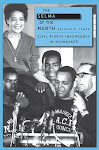
"The Selma of the North": Civil Rights Insurgency in Milwaukee
Between 1958 and 1970, a distinctive movement for racial justice emerged from unique circumstances in Milwaukee. A series of local leaders inspired growing numbers of people to participate in campaigns against employment and housing discrimination, segregated public schools, the membership of public officials in discriminatory organizations, welfare cuts, and police brutality.
The Milwaukee movement culminated in the dramatic—and sometimes violent—1967 open housing campaign. A white Catholic priest, James Groppi, led the NAACP Youth Council and Commandos in a militant struggle that lasted for 200 consecutive nights and provoked the ire of thousands of white residents. After working-class mobs attacked demonstrators, some called Milwaukee “the Selma of the North.” Others believed the housing campaign represented the last stand for a nonviolent, interracial, church-based movement.
Patrick Jones tells a powerful and dramatic story that is important for its insights into civil rights history: the debate over nonviolence and armed self-defense, the meaning of Black Power, the relationship between local and national movements, and the dynamic between southern and northern activism. Jones offers a valuable contribution to movement history in the urban North that also adds a vital piece to the national story.
Think you know the full story of the civil rights era? Patrick Jones's masterful study of the movement in Milwaukee will make you think again. Meticulously researched and elegantly written, The Selma of the North provides a devastating rebuttal of many of the conventional narratives of the civil rights movement. Here a vibrant nonviolent movement in the de-industrializing Midwest grows into a Black Power movement led by urban youth and a white Catholic priest who use confrontational direct action to lay bare the fissures of racial inequality in the 'liberal' North. --Jeanne Theoharis, Brooklyn College, editor of Freedom North and Groundwork
A well-researched, well-written, and important history. Based on a rich array of sources, this book enhances our understanding of civil rights activism in the postwar urban North and establishes a useful foundation for the comparison of similar developments elsewhere in the country. --Joe William Trotter, Jr., Carnegie Mellon University, author of Black Milwaukee
This book fills a serious gap in the literature of the civil rights revolution, joining studies on other cities in laying the groundwork on race and civil rights in the postwar urban North. Jones tells a good story, capturing events that might otherwise be lost to history. --Arnold R. Hirsch, University of New Orleans, author of Making the Second Ghetto
The Selma of the North is an insightful and invigorating addition to the growing literature on black freedom struggles outside of the South. Jones's important and informative account writes Milwaukee back into the narrative of the civil rights-Black Power era and in the process expands our understanding of postwar America. --Peniel E. Joseph, Brandeis University, author of Waiting Till the Midnight Hour
The Selma of the North is a riveting new story of the civil rights movement in America, a tale on par with Selma, Birmingham, and Montgomery in its power and importance. Jones's magisterial research and magnetic prose illuminate the untold story of the battle for the urban north in the 1960s, a battle that shows how race has always been the Achilles heel of white progressives. This story transcends easy dichotomies of black and white, North and South, radical and reformist. How did a group called 'the Commandos' define nonviolence? How did a white Catholic priest become a 'Black Power' leader? If this is not a saga for the age of Obama, I don't know what is. --Timothy B. Tyson, Duke University, author of Radio Free Dixie and Blood Done Sign My Name
Post your question and see what others have to say. Read other people's questions and post your response. Hear what some of the world's leading humanistic thinkers have to say in response to these questions, too...
Here is the original short film the people behind Dropping Knowledge made to introduce their idea and the website:
Here is a more recent 8-minute film on Dropping Knowledge, what it is all about, what they have accomplished so far and what they hope to do in the future:
Dropping Knowledge is very cool and inspiring. I hope you will spend some time with the website and will pass the link along to other people you know...
Too many liberal/progressive/lefties spend a disproportionate amount of time complaining about the way things are, but relatively little time actually building concrete and creative grassroots solutions. Lots of talk, not so much walk. So, I have begun collecting interesting models of social justice activism at the local level to serve as "idea incubators" for others. Periodically I will post about some of these models, with the hope that someone out there might find something useful in their own context. Today, I want to let folks know about Majora Carter and the Sustainable South Bronx Project she started... (Click here, too)
Majora Carter is an AMAZING WOMAN and I hope you will take some time and watch a relatively brief, but incredibly emotional and inspirational TED talk she gave not too long ago on her "Sustainable South Bronx" project. In it, she "details her fight for environmental justice in the South Bronx -- and shows how minority neighborhoods suffer most from flawed urban policy." She's working not just to hold back the polluters who target poor neighborhoods and neighborhoods of color like hers, but to bring back the green.
Carter is a visionary voice in city planning who views urban renewal through an environmental lens. The South Bronx native draws a direct connection between ecological, economic and social degradation. Hence her motto: "Green the ghetto!"
With her inspired ideas and fierce persistence, Carter managed to bring the South Bronx its first open-waterfront park in 60 years, Hunts Point Riverside Park. Then she scored $1.25 million in federal funds for a greenway along the South Bronx waterfront, bringing the neighborhood open space, pedestrian and bike paths, and space for mixed-use economic development.
Her success is no surprise to anyone who’s seen her speak; Carter's confidence, energy and intensely emotional delivery make her talks themselves a force of nature. (The release of her TEDTalk in 2006 prompted Guy Kawasaki to wonder on his blog whether she wasn't "every bit as good as [Apple CEO] Steve Jobs," a legendary presenter.)
Carter, who was awarded a 2005 MacArthur "genius" grant, now serves as executive director of Sustainable South Bronx, where she pushes both for eco-friendly practices (such as green and cool roofs) and, equally important, job training and green-related economic development for her vibrant neighborhood on the rise.
"We could not fail to be inspired by Majora Carter's efforts to bring green space for exercise to the South Bronx. We need more ideas like these to bring solutions to minority communities." Time Magazine
This 18 minute presentation is WELL worth the time and effort. Check it out. Seriously!
And, as always, if you know of any interesting, creative and effective grassroots work going on in your area, please post something in the comments...
Neil Young (yes, that Neil Young!) has penned a thought piece about the American auto industry's woes and how best to solve them. He writes, "We need visionary people now with business sense to create automobiles that do not contribute to global warming." And then he goes on to detail his plan.
Young, a long-time environmental advocate in addition to being one of the most enduring musicians from the 1960s, is the driving force behind Lincvolt, an effort "to turn a nearly 20-foot-long, 5,000-pound 1959 Lincoln Continental into a vehicle that will run on natural gas, electricity or some other form of clean energy. His aim is to win the Progressive Insurance Automotive X Prize, a $10 million challenge to develop a vehicle that can get 100 miles per gallon or better by 2009." Lincvolt even has its own Youtube channel.
I wholeheartedly agree with Young that this moment cries out for bold, visionary solutions to the problems we confront: on the economy, on the environment, on health care, on education, on foreign policy, etc. This is the primary difference between the Clinton Democratic moment in 1992 and the Obama moment in 2008. In 1992, embattled by a rising conservatism, the best the Dems could hope for was a Republican lite version of Democratic politics. In 2008, though, there seems to be real opportunity to think big and throw long. I suspect this will ultimately be the measure of Obama's administration: the degree to which he seizes the historical moment, takes some risks, and goes the visionary route... or the degree to which he misses the moment by being overly cautious and halting in his reform agenda.
The folks over at World Changing have posted a very interesting piece about what it will really take to make the environmental changes necessary to stem the destructiveness of our current way of living and get to a more balanced and sustainable model of existence. The essay is interactive and the authors want your ideas!
Here is how the article begins,
The greatest opportunity of our generation: that's what could be waiting for us, after we leave "green" behind. Saving the biosphere and spreading sustainable prosperity is going to take a lot more than doing things in a more environmentally-conscious manner; it's going to demand we remake much of our material civilization.
And that's good news. It frees us up to think in really new ways, to innovate, to create, to re-invent. Our day is almost defined by the exploding number of people who have access to tools and models and ways of thinking that were previously rare or expert or unimagined. If we live in an age of stark ecological limits, we also live in an age of widespread potential innovation.
We can see on the horizon the silhouette of something incredibly hopeful and exciting: a world of people whose boundless creativity within natural limits uplifts humanity and remakes civilization to be first sustainable, even restorative. This crisis could end up being the greatest opportunity of our generation.
In this work, though, we have two enemies: time and outdated thinking.
We must go fast now. We have possibilities today that we'll lose with every passing year, and the tipping points loom ahead: beyond those, only disaster awaits...
... we also think that this is a moment when we all need many more people iterating their ideas for real change. So, as a starter for that kind of conversation, we're holding a little collaborative challenge.
The idea is simple: share, in words, images or sounds, your idea for the end of some outdated aspect of contemporary society and its replacement with a better way of doing things. Start with the phrase, "Imagine no..."
Then put a link to your entry (or the text itself) in the comments below.
The best examples we know about in two weeks will get prominent coverage here on Worldchanging, and we have some swanky prizes for the folks who do the best job...
Here are a couple of the ideas they came up with as examples:
Imagine no garbage cans. Imagine recycling everything that comes through your door. It's not a pipe dream. With a new generation of zero-waste approaches, cities are building systems where everything you buy is designed to be recycled, composted, or disassembled and reused. Instead of being thrown away, materials flow again and again through closed loops. This process saves huge amounts of resources and energy, reduces toxics and creates jobs. So next time you're taking out the trash, imagine what the world would look like without it. Imagine no garbage cans.
Imagine no warning labels. Imagine bringing nothing into your home that isn't safe for you, your children or your pets. It's not a pipe dream. With ideas like non-toxic production and green chemistry we could eliminate the use of chemicals now feared to cause cancer, birth defects and reproductive problems, and remove them from our homes and ecosystems. Scientists have already developed safe non-toxic alternatives for hundreds of once questionable products, from kitchen cleaners to baby toys. So the next time you go to the market, imagine not needing to read the fine print. Imagine no warning labels.
Imagine no smokestacks. Imagine a world where all our energy comes from clean and renewable sources like wind, solar and hydro power; and where we produce no excess greenhouse gas emissions. It's not a pipe dream. Already, countries like New Zealand, Germany and Sweden are planning ways to make their economies carbon neutral within the next few decades--and we could do it here. We could run everything from our factories to our cars on climate-friendly clean energy. So the next time you go through an industrial area, imagine breathing fresh, clean air. Imagine no smokestacks.
Imagine no air conditioners. Imagine living in a home heated only by the sun and cooled only by the breeze. It's not a pipe dream. With green building techniques and innovative design we can build houses that are warmer in the winter, cooler in the summer, and that use almost no energy at all. Better still, these homes are healthier, more comfortable and less expensive. So the next time you reach for the thermostat, imagine living in a home that doesn't need one. Imagine no air conditioning.
Imagine no sidewalks. Imagine living in a compact community where people own the streets; where kids play, friends sit sipping coffee and cars move slowly when they move at all. It's not a pipe dream. In cities around the world, good design is producing vibrant, compact urban neighborhoods where streets are used as public living rooms and life without a car is made easy. So the next time you're waiting to cross a busy street, imagine a city where people, not cars, come first. Imagine no sidewalks.
Imagine no sprawl. Imagine, instead of a long drive past strip malls and subdivisions, stopping for coffee on your walk to work, or enjoying a magazine while riding light rail through neighborhoods brimming with character and activity. It's not a pipe dream. Cities around the world are creating public transit systems that are efficient, comfortable and simple to use. Smart growth policies preserve local farms and forests, while cutting both commute times and greenhouse gases. So the next time you find yourself lost in suburbia, imagine a different American Dream. Imagine no sprawl.
And there are lots more ideas at the site...
Intrigued?
Everyone should read this essay, discuss it, post some ideas. So, check it out and send the link on to five people you know...
What do you think? What comes after "green"?
Here are a few other good articles from World Changing on the environment:
Max Roach, one of the great drummers in jazz history, passed away on August 16th at the age of 83. As my friend Joe Germuska wrote, "Roach was a giant of the music who kept innovating after most of his generation had passed on and the rest had largely settled into a pretty comfortable niche. Roach, on the other hand, always pressed forward, advancing radical political views as well as a very fresh approach to sound." Amen.
Richard Harrington of the Washington Post suggests the following CDs:
• "Max Roach and Clifford Brown," Vols. 1 and 2, and "Daahoud" (all 1954). These three classic albums define the hard bop sound of the '50s, and give the promise of what would have been a seminal quintet had not Brown died in a car crash in 1956. • "The Max Roach 4 Plays Charlie Parker" (1958). A pianoless quartet explores music by or associated with Roach's first great musical partner.
• "We Insist! Max Roach's Freedom Now Suite" (1960). A fiery melding of politics, racial justice and social aspiration, with lyrics by the late Oscar Brown Jr.
• "Percussion Bitter Sweet" (1961). Another politically tinged outing with help from Eric Dolphy and Clifford Jordan, among others.
• "M'Boom" (1979). Rhythm was fundamental to the instruments used here, but used in way that reflected what Roach called "the traditional definition of music . . . an equal triangle of harmony, melody and rhythm."
Justin Kemerling, a brilliant young graphic designer here in Lincoln, turned me on to World Change recently when I posted about the Urban Culture Project in Kansas City. It is a fascinating website with all kinds of positive ideas and resources aimed at creating a better world.
From the World Change Manifesto:
"WorldChanging.com works from a simple premise: that the tools, models and ideas for building a better future lie all around us. That plenty of people are working on tools for change, but the fields in which they work remain unconnected. That the motive, means and opportunity for profound positive change are already present. That another world is not just possible, it's here. We only need to put the pieces together."
"Informed by that premise, we do our best to bring you links to (and analysis of) those tools, models and ideas in a timely and concise manner. We don't do negative reviews – why waste your time with what doesn't work? We don't offer critiques or exposes, except to the extent that such information may be necessary for the general reader to apprehend the usefulness of a particular tool or resource. We don't generally offer links to resources which are about problems and not solutions, unless the resource is so insightful that its very existence is a step towards a solution. We pay special attention to tools, ideas and models that may have been overlooked in the mass media. We make a point of showing ways in which seemingly unconnected resources link together to form a toolkit for changing the world."