Showing posts with label racial politics. Show all posts

Wednesday, April 29, 2009

Continuing Adventures in Racial Politics

Some good articles have appeared recently dealing with racial politics in the U.S. Check 'em out...

• The Defender has a nice piece on the Black Power Conference that took place in March.

• An excellent analysis of youth and the "post-racial society." Be sure to read the (scary) comments, too!

• A new study shows that college-educated African Americans lose more jobs than their peers across the racial line.

• Here is an AWESOME 1972 interview with Miraim Makeba by Nikki Giovanni.

• This is an important critical piece on Obama's back-peddling on justice for thousands of black farmers who were systematically screwed over by the feds for several decades.

• Colorlines has a nice article focusing on the business class and conservative pundits' attempts to scapegoat policies that are aimed at helping minority communities get access to credit as the supposed cause of the banking crisis.

Monday, January 26, 2009

Post-424: Minority Contracts Imperiled in Nebraska

Matthew Hansen of the Omaha World Herald has an article on the impact of the recently passed anti-affirmative action ballot initiative (Proposition 424) on state-level contracts for minority-owned and female-owned businesses in Nebraska.

Omaha city leaders hope - but can't guarantee - that minority-owned companies will get contracts to help build the new downtown ballpark this year.

That's a marked change from a decade ago, when the Omaha City Council mandated that at least $5.7 million in contracts go to women and minorities during the construction of the Qwest Center Omaha. The difference: Nebraska's new ban on affirmative action.

The ban, upheld in court last week, has halted the City of Omaha's protected business enterprise program, which for years shuttled a small part of giant public works contracts to minority- and female-owned businesses.

It also has sent the city and the University of Nebraska scrambling as they end programs that clearly violate the law, tweak scholarship requirements and strip from hiring policies newly banned language that mentions race, ethnicity or gender.

This seems to confirm what we feared, that the measure will make it harder for the state to develop mechanisms to address the historic inequalities faced by women and minorities when it comes to getting equal access to state resources/contracts.

Any thoughts?

Friday, January 23, 2009

"Black, Brown & White"

This one goes out to Rev. Joseph Lowery for a fine benediction at the Obama inaugural. Many wondered about the end of the prayer, when Rev. Lowrey said,

"Lord, in the memory of all the saints who from their labors rest, and in the joy of a new beginning, we ask you to help us work for that day when black will not be asked to get in back, when brown can stick around ... when yellow will be mellow ... when the red man can get ahead, man; and when white will embrace what is right. Now let all those who do justice and love mercy, say Amen. And Amen. Amen."

Not suprisingly, a slew of white folks, including the usual round of conservative media blowhards, have gotten themselves in a tizzy, claiming Lowrey's words were "racist" and "divisive." That is nonsense...

... Lowrey, a lifelong freedom fighter who is well-known to have a hearty sense of humor, was commenting on the achievement of the day, and the struggle to get there, by riffing on a classic Big Bill Broonzy tune, "Black, White & Brown." Here is the original tune:


Here are the lyrics:

This little song that I'm singin' about
People you know it's true
If you're black and gotta work for a living
This is what they will say to you

They says if you're white, you're all right
If you're brown, stick around
But as you's black, m-mm brother, git back git back git back


I was in a place one night
They was all having fun
They was all byin' beer and wine
But they would not sell me none

They said if you was white, should be all right
If you was brown, stick around
But if you black, m-mm brother, git back git back git back

Me and a man was workin' side by side
This is what it meant
They was paying him a dollar an hour
And they was paying me fifty cent

They said if you was white, 't should be all right
If you was brown, could stick around
But as you black, m-mm boy, git back git back git back

I went to an employment office
Got a number 'n' I got in line
They called everybody's number
But they never did call mine

They said if you was white, should be all right
If you was brown, could stick around
But as you black, m-mm brother, git back git back git back

I hope when sweet victory
With my plough and hoe
Now I want you to tell me brother
What you gonna do about the old Jim Crow?

Now if you was white, should be all right
If you was brown, could stick around
But if you black, whoa brother, git back git back git back

And here is a nice diary from DailyKos that details the history of the song and the meaning behind it.

Since I am at it, here is an interesting music track by Steinski which mixes Lowery's benediction with a vigorous rhythm and then a gospel groove...

Oh! And here is Rev. Lowery's benediction, in case you missed it:

Tuesday, January 20, 2009

Glory, Hallelujah!

Ding Dong the Witch is dead! Our long national nightmare is over!

Glory, hallelujah! A new era has begun in America!! Give thanks and praises for our new president! May he govern with wisdom and vision, with a sense of justice and human rights as his guide!

We've got a brand new funky president!! Here is to Barack Hussein Obama, OUR PRESIDENT!!!! Celebrate the moment:

A song for those who have come before us, particularly the many thousands gone, who struggled mightily against injustice, so that we might experience this day. This is their victory, too:

"Oh Freedom," unknown artist:

Oh Freedom - Negro Spirituals

A song for the millions of people captivated and inspired by the new President's vision of a better America and a better world:

"Power to the People," Curtis Mayfield:

Power To The People - Curtis Mayfield

And a final song for the Man himself, our 44th President, whose time has come:

"Funky President," James Brown:

Funky President - James Brown

Amen. Glory, hallelujah!

Wednesday, January 07, 2009

Has Obama Changed the Politics of Race?

According to a recent "News Analysis" piece in the L.A. Times by Peter Wallsten, Obama's election is "changing the politics of race." Wallsten contends: "Many black leaders are rejecting the old tactics of protest and the rhetoric of inequality. 'You can't use 50-year-old ideas in a new political era,' one pastor says."

I am ambivelent about these kinds of arguments. On one hand, it is true that 2008 is not 1958 or 1968, so we need to craft a political vision and political rhetoric that speaks to our own historical reality. No doubt about that. Yet, I'm not as comfortable "rejecting the rhetoric of inequality," when racial inequality is so readily apparent and persistent throughout American society. Heck, in my own city - Omaha - 60% of all African American children live in poverty. 60%!! If 60% of all white kids lived in poverty, the city and state would literally stop and make herculean efforts to deal with it, including pouring zillions of dollars into various programs to help white kids and their families out. Or, recently the Omaha World Herald ran two articles in the same week, one on an affluent white school in West Omaha where the public school is buying each kid a laptop (talk about the rich getting richer!) and the other on a school in the poorer and blacker North Side where parents are being charged an extra $5 just to provide basic materials to their kids, like paper. The inequalities are glaring and shameful. And we just went through an election, right? So surely the various political candidates all blustered on about the massive inequality in North Omaha (the third poorest black community in the United States)? Wrong. Not one candidate said a peep about black children or North Omaha, or economic or racial inequality. Nothing. Nada.

In a way, this effort to move away from the politics of grievance seems, in part, to reflect the class position of some leaders who themselves have made it to the middle-class or above, but more significantly, it appears to me to be an accommodation to the fact that most Americans are clueless about the reality not only of our racial past, but also of our racial present. Most have no clue what race is, how it works and persists, what is different from the civil rights era and what remains to be done. And, I fear this kind of political positioning, while strategically smart on some levels, might also reinforce the idea among many white folks that we are "beyond race" and that black people and other aggrieved groups simply play the "victim card" all the time in some unjustified way. A HUGE part of the remaining solution to racial inequality is a new consciousness among enough white people, a consciousness that is not mired in white guilt, but looks honestly at racial inequality in America, that places that inequality in its proper historical context and which owns up to the fact that we ALL are responsible for this mess and for cleaning it up!

What do you think?

Tuesday, November 18, 2008

A Post-Racial Society?

Over at The Progressive, Fred McKissick reminds us, in this post-election Obama-glow, "We still aren’t in a post-racial society." He asks,
Exactly how can we be in post-racial America when nearly 40 percent of black children under the age of 5 live at or below the poverty line?

How are we in post-racial America when the level of school segregation for Hispanics is the highest in the forty years and segregation of blacks is back to levels not seen since the late 1960s?

How are we in post-racial America when the gaps in wealth, income, education and health care have widened over the last eight years?
Yes, how, indeed?

Barack Obama's victory was something, but not everything, and we need to be clear about the serious and daunting task that lays ahead in terms of racial justice. The challenge before us is to put substance to the symbol. We must not get so lost in our self-congratulation over the election of our first black president that we forget the persistent chasm of caste and class in our society today, a yawning gap that will require sustained attention, organized political action and significant resources if it is to be bridged.

Thursday, November 06, 2008

The Racial Implications of Obama's Historic Win

We are starting to see a trail of articles and programs focusing on the racial implications of Obama's historic win on Tuesday. Here are a few for your consideration:

• Pulitzer Prize-winning biographer of "America in the King Years," Taylor Branch, cautions not to exaggerate the racial progress represented in Obama's victory.

• The NYTimes had a nice piece, "A Time to Reap for Foot Soldiers of Civil Rights"

• Civil Rights icons react to Obama's victory.

•In, "In Our Lifetime," Harvard African American Studies guru, Henry Louis Gates, Jr., argues that "from toiling as White House slaves to President-elect Barack Obama, we have crossed the ultimate color line."

• Famed literary figure, Alice Walker, penned "An Open Letter to Barack Obama."

• John Nichols suggests this is "America's Mandela Moment."

• Post-election, The Root suggests what black folks shouldn't do and what white folks shouldn't do.

• Obama's victory a "non-violent revolution"? Many think so.

• The sister of one of the girls killed in the 1963 16th Street Church bombing in Birmingham speaks out about an Obama victory.

• And what about the so-called Bradley Effect? A lot of folks are thinking and writing about it. Ann Applebaum suggests race helped Obama win, not hurt him.

What do you think? Have you seen other interesting stories on the racial dynamics of Obama's win? Post a link in the comments section...

Monday, October 27, 2008

"Why They Hate Obama: Miscegenation and Other Nightmares of the Racist Political Imagination"

Stephen Ducat has a nice meditation on the white racist's political mindset.  The article places the emphasis NOT on Obama's blackness, but on his mixed-race background:
The frank comments of unapologetic anti-Obama racists across the country have recently gained a wide national audience. As Ricky Thompson, a pipe fitter from Mobile, Alabama, told a New York Times reporter, "He's neither-nor. He's other. It's in the Bible. Come as one. Don't create other breeds." Another denizen of the GOP's "real America" shared his spiritual insights with the same interviewer. Glenn Reynolds, of Martinsdale, Virginia pointed out, "God taught the children of Israel not to intermarry." Such shameless declarations of prejudice reveal something obvious but easily overlooked: It is not Obama's blackness that disturbs these pious bigots, but his grayness.
After going through a brief history of the strict racial divisions in our society, their social, legal, political, psychological and religious roots, and why mixed-race people confound and particularly threaten white supremacy, he writes,
Thus, the very visibility of Barack Obama - let alone his candidacy for the most powerful and, before Bush, the most esteemed job in the world - creates a category crisis of epic proportions. He not only mouths a rhetoric of transcending division, but is himself a seamless genetic integration of what should be immiscible. The decent, God-fearing racist must be plagued by unanswerable questions: What is this incomprehensible mutation of badness and goodness? How can the same person contain that with which I identify and which I despise? What does that make me?
It is well worth a read. I hope you will take the time to check it out. Then, leave a comment, if you feel so moved...

Sunday, October 19, 2008

McCain/Palin Campaign Channeling Its Inner George Wallace?

Diane McWhorter, award-winning author of Carry Me Home, thinks so. She writes,
So how is Sarah Palin like—and not like—George Wallace? And how much is John McCain relying on tactics Wallace used? The answers: more than she can probably know and more than he appears to have admitted to himself.

Check it out...

Thursday, October 16, 2008

NYT: "In Voting Booth, Race May Play a Bigger Role"

Yesterday, the New York Times ran five good pieces on the role of race in the presidential election from a regional perspective...

• Adam Nagourney suggests that despite some high profile moments where race was out in the open, on full display, that it is more often "found only in sentiments that are whispered, internalized or masked by discussions of culture or religion, and therefore hard to capture fully in polling or even to hear clearly in everyday conversation." He goes on, "Political strategists once assumed that polls might well overstate support for black candidates, since white voters might be reluctant to admit racially tinged sentiments to a pollster. Newer research has cast doubt on that assumption. Either way, the situation is confounding aides on both sides, who like everyone else are waiting to see what role race will play in the privacy of the voting booth."

• In a companion article on "the bi-racial factor" in the South, Adam Nossiter finds that for some white southerners, their uncertainty of Barack Obama "starts at racial identity." The piece begins: "The McCain campaign’s depiction of Barack Obama as a mysterious 'other' with an impenetrable background may not be resonating in the national polls, but it has found a receptive audience with many white Southern voters." He then writes, "Being the son of a white mother and a black father has come to symbolize Mr. Obama’s larger mysteries for many voters. When asked about his background, a substantial number of people interviewed said they believed his racial heritage was unclear, giving them another reason to vote against him."

• Closer to our neck of the woods, in Colorado, Kirk Johnson finds, "The debate over race — and for some, the soul-searching — that Mr. Obama’s history-making candidacy as the Democratic nominee has engendered are clearly present here, just different." One theme that emerged in Johnson's reporting is that "the lack of racial interaction made Mr. Obama’s race more of an intellectual concept, secondary to ordinary political considerations." Yet, "in a sign of the limits of tolerance, some white voters also expressed a vague fear that if they did experience daily life in black America, their opinion of black people might change for the worse."

• In Nevada, Jennifer Steinhauer found that door-to-door volunteers for Obama "face a complex issue" in race. A case in point, when one woman told a canvasser, “I don’t want to sound like I’m prejudiced... I’ve never been around a lot of black people before. I just worry that they’re nice to your face but then when they get around their own people you just have to worry about what they’re going to do to you.” The Obama volunteer responded: “One thing you have to remember is that Obama, he’s half white and he was raised by his white mother. So his views are more white than black really.” She went on to assure the woman that she was so impressed with Mr. Obama the person, that she failed to notice the color of his skin anymore." The exchange was posted online and it evoked outrage among many readers. “Amazing how even white people who support Obama and are canvassing for him default to classic white supremacist language,” wrote one reader. Another said, “What in the world is this volunteer thinking?” But, according to Steinhauser, the Obama canvasser's "efforts reflect the complex task that many volunteers canvassing for Mr. Obama face. While she and other Obama volunteers may feel offended by remarks like Ms. Mendive’s, an admonishment would not persuade a voter on the fence to pull the lever for Mr. Obama. So she often takes another tack."

• And, in a final article, reporter Shaila Dewan finds on campuses in Kentucky and southern Ohio that "In Generation Seen as Colorblind, Black Is Yet a Factor." She writes, "Throughout this campaign season, many commentators and politicians have proclaimed today’s youth to be a colorblind generation in which racial prejudice has receded and diversity is embraced. But in two days of interviews here and north of the Ohio River in Cincinnati, most young people acknowledged — or even insisted — that race was still a powerful if subtle factor among their peers." Citing statistical data, along with personal interviews, Dewan finds that while "most polls show that Mr. Obama is far more popular among younger voters than his Republican opponent, Senator John McCain... exit polls conducted by Edison/Mitofsky this year [show] younger Democratic primary voters were no less likely to say that race had been an important factor in their vote than people 30 and older. And in two states — Georgia, where African-Americans dominated among younger voters, and Illinois — young voters were actually more likely than older ones to say that race had been important." Moreover, "Some data have also found that young voters are less likely than older ones to say the country is ready for a black president, though these data make it hard to tell whether the young are more influenced by race or simply more realistic about its power. In a nationwide New York Times/CBS News poll conducted in July, more than two-thirds of voters said the country was ready for a black president. Among voters 30 or older, 23 percent disagreed, compared with 34 percent of younger voters."

Taken together, what do these regional portraits of race and election '08 reveal about how far the nation has come and what work remains ahead? How might we situate these findings within the longer historical trajectory of race and politics? What has been your experience with issues of race and the presidential election?

UPDATE: More food for thought on race and election '08...

• KKK flyers show up in OK newspapers.

• Al Jazeera reporter find racism at Palin rally.

• San Bernadino GOP group makes fake bills featuring Obama, watermelon, ribs and a bucket of fried chicken.

• Sacramento GOPers approve email that suggests waterboarding Obama and compares him to Osama bin Laden.

• Rush Limbaugh perpetuates radical right-wing offense, claiming Obama Arab, not African American.
Saturday, October 11, 2008

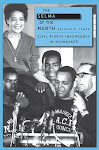
Civil Rights Legend John Lewis Slams McCain/Palin Politics of Hate and Division

John Lewis, one of the great living legends of the civil rights era and a TRUE American hero, slammed the McCain/Palin ticket today for their role in stirring up increasingly hateful and racialized sentiments at their rallies over the last several days. Lewis, who participated in sit-ins, Freedom Rides and the historic voting rights campaign in Selma, and who now represents Georgia in Congress, said:

"As one who was a victim of violence and hate during the height of the Civil Rights Movement, I am deeply disturbed by the negative tone of the McCain-Palin campaign," Lewis said in a statement. "Sen. McCain and Gov. Palin are sowing the seeds of hatred and division, and there is no need for this hostility in our political discourse."
He continued:

"During another period, in the not too distant past, there was a governor of the state of Alabama named George Wallace who also became a presidential candidate. George Wallace never threw a bomb. He never fired a gun, but he created the climate and the conditions that encouraged vicious attacks against innocent Americans who were simply trying to exercise their constitutional rights. Because of this atmosphere of hate, four little girls were killed on Sunday morning when a church was bombed in Birmingham, Alabama," said Lewis.
Lewis concluded with a wanring:

"As public figures with the power to influence and persuade, Sen. McCain and Gov. Palin are playing with fire, and if they are not careful, that fire will consume us all. They are playing a very dangerous game that disregards the value of the political process and cheapens our entire democracy. We can do better. The American people deserve better."
In response, the McCain campaign lamely attacked Lewis, a man McCain has previously called one of the "wisest" in Congress:

Congressman John Lewis' comments represent a character attack against Governor Sarah Palin and me that is shocking and beyond the pale. The notion that legitimate criticism of Senator Obama's record and positions could be compared to Governor George Wallace, his segregationist policies and the violence he provoked is unacceptable and has no place in this campaign. I am saddened that John Lewis, a man I've always admired, would make such a brazen and baseless attack on my character and the character of the thousands of hardworking Americans who come to our events to cheer for the kind of reform that will put America on the right track.

I call on Senator Obama to immediately and personally repudiate these outrageous and divisive comments that are so clearly designed to shut down debate 24 days before the election. Our country must return to the important debate about the path forward for America.
Obama issued this statement:

Senator Obama does not believe that John McCain or his policy criticism is in any way comparable to George Wallace or his segregationist policies. But John Lewis was right to condemn some of the hateful rhetoric that John McCain himself personally rebuked just last night, as well as the baseless and profoundly irresponsible charges from his own running mate that the Democratic nominee for President of the United States 'pals around with terrorists.' As Barack Obama has said himself, the last thing we need from either party is the kind of angry, divisive rhetoric that tears us apart at a time of crisis when we desperately need to come together. That is the kind of campaign Senator Obama will continue to run in the weeks ahead.

Thursday, October 09, 2008

"The Palin Mob": Strongsville, Ohio

I grew up in Cleveland, Ohio. There are many things I love about my hometown, but the pervasive and often overt racism and ignorance of many white people there is not one of them. This video, titled "The Palin Mob," gives a good indication of what I am talking about. The footage was taken recently outside a Palin/McCain rally in Strongsville, which is just South of Cleveland:

I'd be lying if I wrote that this stuff surprises me. Having lived in Cleveland, it does not. In fact, I hate to tell you that this is fairly mild compared to what you might turn up in this beleaguered de-industrialized city. It is a good indication of what the Obama campaign is up against not only in Ohio, but in many depressed or working-class communities across the country.

Thursday, October 02, 2008

Saying What Needs to Be Said

Please. PLEASE! Watch this video...

Amen, brother! Speak the Truth. That is the AFL-CIO's Richard Trumka laying it down about racism in the electorate at the Steelworker's Union gathering recently. This is the discussion that needs to take place within the labor movement, among the working-class and across the country.

Now, the most important part: send this link to EVERYONE you know in a battleground state, particularly Ohio, Pennsylvania, Missouri, Michigan, Nevada, West Virginia, Virginia, Florida, Indiana, North Carolina, etc. PLEASE.

For good measure, here he is defeding Obama's infamous "bitter" comment and explaining why, "Hell Yes!" working-class America is angry:

Someone should get this guy some 527 money, make an ad and air it in every battle ground state. Someone should pony up the money and get this guy in front of as many working-class audiences as possible between now and election day.

Please pass this along...

Wednesday, September 24, 2008

The Language of Race in Election '08

Brent Staples writes about the language of race in election '08 over at the New York Times. Things that need saying. Check it out. Pass it around...

Any thoughts, reactions, ideas?

Saturday, August 30, 2008

Lest We Forget... Katrina Three Years Later

Please take some time away from the presidential election to reflect on the memory, meaning and ongoing tragedy of Hurricane Katrina, three years later. here are a few resources:

Magnum Photo reminds us what happened three years ago with a powerful photo essay.

Over at DailyKos, Bill in Portland Maine has put together "the Hurricane Katrina Hall of Shame." Well worth this walk down memory lane.

American Public Radio's "Speaking of Faith" put together a great audio story, with lots of resources, on poverty after Katrina.

Bill Quigley explores the "pain index" in New Orleans three years later.

Larry Blumenfeld writes about music, culture and recovery in New Orleans.

Kai Wright, in "Katrina, the Ultimate Party Crasher," reminds us how far we have yet to go in bringing back one of our nation's most beloved cities.

Lizzy Ratner explores the way New Orleans has redrawn the color line after Katrina.

Deepa Fernandes writes that three years on, homelessness looms for many of Katrina's victims.

Fernandes also writes about FEMA's toxic trailers.

Stuart Klawans reviews the new Katrina documentary, "Trouble the Water," a film which prompted N.O. mayor Ray Nagin to walk out.

Black Agenda Report suggests we are in "the age of Katrina," not the age of Obama.

Here is a will.i.am-style Obama video using New Orleans great, Alain Toussaint's, classic, "Yes We Can Can":

Monday, August 25, 2008

Is Barack Obama the End of Black Politics?

As the Democratic convention gets underway today in Denver, and as Barack Obama stands on the cusp of becoming the first African American nominated for the presidency by a major U.S. political party, the NYTimes has raised some important questions about the meaning of Obama's success.

On August 10, they asked a number of prominent black political leaders, "Is Obama the end of black politics?" The article is well worth reading. Here is the heart of the matter:
For black Americans born in the 20th century, the chasms of experience that separate one generation from the next— those who came of age before the movement, those who lived it, those who came along after — have always been hard to traverse. Elijah Cummings, the former chairman of the Congressional Black Caucus and an early Obama supporter, told me a story about watching his father, a South Carolina sharecropper with a fourth-grade education, weep uncontrollably when Cummings was sworn in as a representative in 1996. Afterward, Cummings asked his dad if he had been crying tears of joy. “Oh, you know, I’m happy,” his father replied. “But now I realize, had I been given the opportunity, what I could have been. And I’m about to die.” In any community shadowed by oppression, pride and bitterness can be hard to untangle.

The generational transition that is reordering black politics didn’t start this year. It has been happening, gradually and quietly, for at least a decade, as younger African-Americans, Barack Obama among them, have challenged their elders in traditionally black districts. What this year’s Democratic nomination fight did was to accelerate that transition and thrust it into the open as never before, exposing and intensifying friction that was already there. For a lot of younger African-Americans, the resistance of the civil rights generation to Obama’s candidacy signified the failure of their parents to come to terms, at the dusk of their lives, with the success of their own struggle — to embrace the idea that black politics might now be disappearing into American politics in the same way that the Irish and Italian machines long ago joined the political mainstream.

“I’m the new black politics,” says Cornell Belcher, a 38-year-old pollster who is working for Obama. “The people I work with are the new black politics. We don’t carry around that history. We see the world through post-civil-rights eyes. I don’t mean that disrespectfully, but that’s just the way it is.

The letters to the editor regarding this article, were also very interesting.

And here is the Black Agenda Report's scathing response.

This morning, the Times took on another question that many African American academics and grassroots political leaders have been discussing for some time now. Here is the gist:
Mr. Obama has received overwhelming support from black voters, many of whom believe he will help bridge the nation’s racial divide. But even as they cheer him on, some black scholars, bloggers and others who closely follow the race worry that Mr. Obama’s historic achievements might make it harder to rally support for policies intended to combat racial discrimination, racial inequities and urban poverty.

They fear that growing numbers of white voters and policy makers will decide that eradicating racial discrimination and ensuring equal opportunity have largely been done. [emphasis added]

Both articles raise critical issues that have not yet been aired widely in the national media, but which we all need to consider. Does Obama represent a new approach to the politics of race? a new relationship between African Americans and American democracy? Or, does Obama's success risk overshadowing the very real struggles and persistent inequalities facing a disproportionate number of black Americans? What exactly, if anything, remains to be done to overcome the legacy of white supremacy and racial injustice in American society? Is Obama's success too easily interpreted, or perhaps manipulated, by some whites to "prove" that the struggle for racial justice is now complete and, as such, that there is no longer any social responsibility to act to ameliorate continuing racial disparities. Finally, what do these articles reveal about the relationship between the present and the past?

What do you think? Feel free to share your thoughts in the "comments" section...